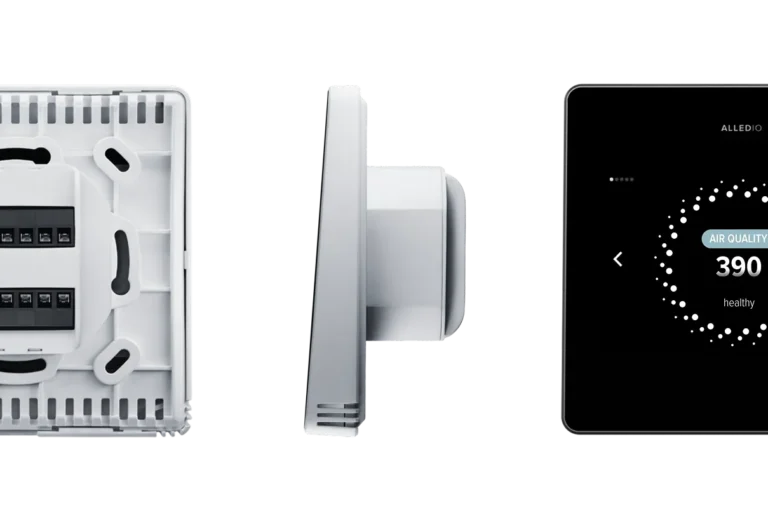
Why Follow This Step-by-Step Modbus Sensor Setup?
Get essential insights on the importance of a structured Modbus sensor setup and discover how it can prevent costly communication failures.
Your source for best practices, insights, and tips about sensors, thermostats, room units and related topics of HVAC and AHU.
Get essential insights on the importance of a structured Modbus sensor setup and discover how it can prevent costly communication failures.
BACnet IP vs MS/TP vs EnOcean – in building automation, BACnet and EnOcean are not rivals so much as complementary characters. BACnet/IP and BACnet MS/TP are the structured, backbone languages of the building, while EnOcean is the discreet, wireless whisper at room level. Understanding how these protocols differ – and how they fit together – is key to designing a resilient, flexible, and modern building…
When planners compare Modbus vs LoRaWAN sensors, they are usually deciding between a robust wired backbone and a long‑range wireless IoT layer for their buildings. Both have their place – but for reliable, real‑time HVAC and building automation, Andivi Modbus sensors often deliver the most stable and cost‑effective foundation. In this article, we explain the key differences and…
Humidity control to reduce risk of ESD is the practice of maintaining indoor moisture levels high enough to limit static charge build-up, while still staying low enough to avoid moisture-related problems like condensation. When air gets too dry, static electricity becomes easier to generate and harder to dissipate—exactly the kind of “invisible troublemaker” that sensitive…
Put the NOVOS Touch Room operating Unit and the Alledio Room Operating Unit next to each other and you immediately know you’re dealing with flagship devices. NOVOS Touch is Thermokon’s 4.8″ glass‑front showpiece for room climate, lighting and shading control. The Alledio Room Unit, on the other hand, is a minimalistic, beautifully understated glass panel whose whole personality…
If developing for ESP32 looks easy from a distance, that is because the distance is doing a lot of heavy lifting. On the workbench, it can feel wonderfully straightforward: a dev board, a few sensors, some Wi-Fi magic, and suddenly your idea is alive. But turning that cheerful prototype into a reliable product is a…
Silicone temperature probes are a reliable and versatile solution wherever the temperature regularly exceeds 100 °C but remains within a range of up to approximately 180 °C. This is their main “sweet spot” and a key advantage over classic PVC‑cable probes. Flexible and heat‑resistant up to 180 °C The silicone connection cable maintains its flexibility and insulating properties even at elevated temperatures where PVC cables…
Harness the power of Modbus with these top five sensor configurations for industry—discover how they can transform your operations today!
A premium hotel room should not feel like a puzzle box with mood lighting. It should feel effortless, intuitive, and quietly intelligent. That is exactly where a Hotel Room Controller (HRC) earns its place. When designed well, it becomes the invisible conductor of the room—coordinating comfort, ambiance, and convenience without ever asking the guest to…
There is a moment every product company eventually faces. The prototype works. The investor demo was a success. The market research says “go.” And then someone asks the question that has killed a thousand great ideas: “So… who’s going to actually build this thing?” Finding the right OEM services supplier for electronics isn’t just a…
BACnet vs ZigBee sensors are often compared when engineers need to choose the right communication protocol for modern building automation and smart home projects. What Is BACnet? BACnet (Building Automation and Control Networks) is an open communication protocol designed specifically for building automation – HVAC, lighting, access control and other technical systems in buildings. Unlike proprietary protocols,…
In a premium hotel, the room is never just a room. It is a first impression, a service desk, a lighting scene setter, a climate manager, and, on a good day, a quiet little magician that makes everything feel effortless. That is exactly why the Guest room control Panel matters so much. When done well,…
So, you’ve got a brilliant idea for a new piece of hardware. Maybe it’s a smart sensor that will revolutionize building automation, or a connected device that’s going to make industrial processes 10x more efficient. You’ve sketched it out, you’ve told your friends, and you might even have a messy breadboard prototype blinking happily on…
Rain gauge vs rain sensor is an important topic in building automation because these two devices handle rainfall in very different ways. When it comes to rainfall detection, precipitation measurement and building automation, two devices are often mentioned side by side: rain gauges and rain sensors. Although they are related, they serve different purposes and are used in different types of automation…
Buying a building without checking its energy efficiency is a lot like buying a used car without asking about the mileage—you might love the paint job, but you are going to hate the fuel bill. In the real estate world, that “fuel bill” is no longer a hidden surprise waiting for the first winter. It…
Temperature monitoring is essential in HVAC systems, building automation and industrial applications where efficiency, safety and product quality depend on reliable data. Among the different sensor technologies, the Temperature Probe LM235Z offers an attractive combination of precision, fast response and cost‑effectiveness for low‑ to medium‑temperature applications. This article explains what the LM235Z temperature probe is, how it works,…
The journey of a hardware startup usually begins with a moment of pure clarity—a napkin sketch, a sudden realization in the shower, or a frustrated “there has to be a better way” muttered at a broken machine. But transforming that fleeting spark into a tangible, shippable device is akin to crossing a mountain range without…
Sensors for data collection are the difference between a system that seems under control and one that actually is. In buildings, industry, and especially high-stakes environments like data centers, the quality of decisions depends on the quality of measurements—and that starts with choosing the right sensors and integrating them properly. Andivi’s Modbus and BACnet sensor…
The Alledio Room Unit looks like a room controller, functions as one today, and is marketed as one—but beneath the surface lies something far more interesting: a customizable room unit interface built on a flexible platform that can be reshaped for industries, applications, and use cases that have nothing to do with HVAC. Strip away…
Consumer electronics accessories live in a world of unforgiving detail. A phone stand that wobbles, a charging dock that runs hot, or a cable that frays near the strain relief can turn a promising product into a return label. That’s why OEM services for consumer electronics accessories are less about “making stuff” and more about…
Getting a BACnet sensor installed is one thing. Knowing it is actually working correctly is another. Whether you are commissioning a new installation or troubleshooting an existing one, having a clear, methodical process for testing your Alledio BACnet Sensor saves time, eliminates guesswork, and turns a potentially frustrating afternoon into a clean, confident sign-off. This…
If buildings could talk, most would probably complain about the temperature. But in the modern era of smart infrastructure, we don’t have to guess what a building is “feeling”—we have room units and sensors to tell us. These devices are the nervous system of any property, translating invisible data like temperature, humidity, and CO2 into…
Put the NOVOS 7 Room Operating Unit and the Alledio Room Unit side by side on a wall and you immediately see two different design philosophies. NOVOS 7 Room Operating Unit is a very capable room operating unit with a 3.5″ TFT screen, a rotary‑push knob and four shortcut keys, clearly presenting itself as “the…
Get expert tips to resolve Modbus sensor configuration issues and discover how simple adjustments can lead to improved system performance. Don’t miss out on these insights!
The maritime industry has long been a place where tradition meets innovation— where centuries-old seafaring wisdom collides with cutting-edge technology. Today, cabin automation is no longer a luxury reserved for superyachts; it’s becoming a baseline expectation across cruise ships, ferries, and research vessels. Yet, the challenge isn’t just automation itself—it’s creating user panels that are…
Private label products live in an interesting tension: they must feel uniquely “yours,” yet they’re often built on shared technologies, supply chains, and manufacturing realities. That’s where OEM services for private label manufacturing become the difference between a product that merely exists and a product that reliably performs, scales, and strengthens your brand. Andivi supports…
If a temperature probe feels like “just a sensor on a cable,” the wiring can seem like a minor detail—until your readings drift like a compass near a magnet. In 3-wire Vs. 4-wire temperature Probes, the extra conductor(s) aren’t about luxury; they’re about keeping measurement accuracy intact when real-world wiring resistance tries to sneak into…
Modbus and DALI sensors are designed for different roles in building automation and lighting control. Modbus is a flexible, general‑purpose protocol widely used for industrial and building automation, while DALI is a specialized protocol created specifically for digital lighting control. A clear understanding of how these protocols differ in architecture, data handling, and typical applications…
If you’ve ever stepped into a data center, you know it feels like entering a giant, humming organism — machines breathe, lights flicker, and invisible rivers of data flow through the racks. But behind all that cool, controlled order is an ecosystem that relies on precise environmental monitoring. At the heart of that monitoring are…
The Alledio Room Unit is best understood as an OEM Modbus Controller wearing a friendly face. Under the glass, it’s a configurable control platform with a touch display, RS485 Modbus connectivity, and a modular I/O and sensor stack—ready to be shaped into wildly different applications through firmware, UI, and even hardware customization. This post explains…
OEM work is often described as “custom products for someone else’s brand,” which is true—but incomplete. The real value of strong OEM services is not the logo on the front; it’s the ability to take an idea, shape it into a manufacturable product, and support it through iterations without losing time, quality, or sanity. Andivi…
In modern HVAC design, fresh air isn’t just about comfort—it’s a matter of precision, control, and efficiency. For Air Handling Unit (AHU) manufacturers, this precision often depends on one crucial piece of the puzzle: the room unit. When that room unit also measures carbon dioxide (CO2) in parts per million (ppm), it stops being a…
Buildings don’t just use energy—they quietly set the rhythm of national energy demand through heating, cooling, hot water, lighting, and equipment loads. And because so much of that demand is operational (what happens every day after handover), energy efficiency has become less about shiny new hardware and more about how well buildings behave in real…
Sensors for data acquisition are the quiet translators of the physical world: they turn temperature, humidity, air quality, pressure, and presence into clean, structured data that automation systems can actually use. When chosen well, sensors for data acquisition don’t just “measure stuff” — they create a dependable foundation for control, optimization, reporting, and troubleshooting across…
Fan coil units represent the unsung heroes of modern climate control—quietly working behind ceilings and within walls to deliver comfort where centralized systems fall short. Yet the intelligence guiding these units determines whether they operate as energy drains or efficiency champions. The Alledio Room Unit / Room Thermostat emerges as a sophisticated Modbus RTU fan…
Buildings are where most of life happens—and where a surprising amount of energy disappears. Heating, cooling, ventilation, lighting, hot water: together they make buildings one of the biggest levers Europe can pull to cut emissions and reduce energy bills. In that sense, energy performance isn’t a niche technical metric; it’s a proxy for comfort, operating…
The essential Modbus settings for sensor configuration can significantly impact performance, but there are critical factors you might not have considered.
When you put the Thermokon thanos EVO and the Andivi Alledio Room Unit side by side, you’re clearly in flagship territory. Both are full‑touch room operating units with strong sensing capabilities, premium materials, and multi‑function control. The main difference is philosophical: thanos EVO is anwell-working room operating unit for commercial buildings with broad bus variants,…
Air Handling Units represent the circulatory system of modern buildings—constantly breathing life into commercial, light commercial, and residential spaces. Yet the efficiency of this vital infrastructure depends not only on the AHU itself but on the intelligence controlling it. The Alledio Room Unit emerges as a sophisticated OEM room controller for AHU applications, delivering precision…
Reliable wind speed and wind direction data are essential for protecting facades, external blinds, awnings and roofs, as well as for optimising building automation strategies in all weather conditions. Accurate local measurements help prevent wind damage, reduce downtime, and extend the lifetime of shading and facade elements. Wind speed sensor ANDWM1 The wind speed sensor ANDWM1 is a cup anemometer designed to measure wind speed in the range…
In today’s precision-driven industries, selecting the right temperature probe is a critical decision that impacts operational efficiency, safety, and cost management. From manufacturing floors to research laboratories, these instruments ensure accurate temperature monitoring tailored to specific applications. However, with diverse probe types and technical variables at play, the choice can be complex. This guide distills…
Andivi’s PM 2.5 BACnet MS/TP Sensor offers precise detection of fine particulate matter with high accuracy (deviation under 10%) and supports seamless integration into building automation systems via the BACnet MS/TP protocol, enabling real-time and reliable air quality monitoring for safer, smarter buildings[5][1][3]. This sensor family also tracks multiple air quality parameters—including VOC, CO2, PM1.0, and PM10—making it a versatile solution that enhances HVAC controls, regulatory compliance, and occupant health[5].
Simplify your Modbus sensor setup with these five best practices to ensure optimal performance and reliability; discover the key steps to success.
Think of the Alledio Room Unit as a blank canvas waiting for an artist’s brush—except in this case, the artist is you, and the canvas is a powerful OEM touch panel capable of transforming into virtually anything your commercial application needs. Strip away the current thermostat interface, and what remains is not just another room controller, but…
Precise temperature measurement in demanding environments depends on durable materials and clever engineering. Silicone temperature probes rated for up to 180°C answer these needs with a blend of flexibility, reliability, and broad application potential. Why Choose Silicone up to 180°C? Silicone is prized for its unmatched thermal stability, remaining flexible and resistant to cracking or degradation even when exposed to elevated temperatures. Standard PVC cables may serve reliably up to 105°C,…
When choosing a communication protocol in building automation, Modbus and EnOcean often end up in the same room – but they behave very differently. Modbus is the seasoned, wired workhorse; EnOcean is the nimble, wireless, energy‑harvesting specialist. Understanding where each shines helps you design smarter, more reliable, and more future‑proof systems. Modbus and…
The proper configuration of Modbus temperature sensors is crucial for accurate data collection; discover the hidden costs of neglecting this essential step.
When comparing the Regio RCX Room Controller with the Andivi Alledio Room Controller, you are essentially choosing between a very capable, fieldbus‑oriented classic and a highly connected, OEM‑friendly platform. Both can run a modern room, but the Alledio Room Unit leans further into WiFi, cloud integration, and customization, which makes it especially appealing for various…
Powerful microcontrollers have revolutionized the world of embedded systems, and at the forefront of this transformation stand the STM32 and ESP32 processors. These silicon workhorses have become the beating hearts of countless industrial applications, smart devices, and IoT solutions worldwide. When companies need expert guidance to harness their full potential, Andivi stands ready to bridge…
What Is BACnet /SC? Why the Need for BACnet Secure Connect? In the ever-evolving world of building automation, BACnet Secure Connect (BACnet SC) has arrived as the trusted bouncer at the digital club, making sure only authorized devices get past the velvet rope. Traditional BACnet, though robust and widely adopted, operated like a public conversation—any…
Connecting Modbus devices in a building can feel a bit like organizing people into a single waiting line instead of a crowd at a ticket counter: calmer, clearer, and much easier to manage. A Modbus Daisy Chain does exactly that for Alledio and Andivi Modbus sensors in building automation, offering a structured way to connect…
The Andivi Outdoor Temperature Sensor with Sun Protection PT100 / PT1000 takes a familiar engineering problem—radiant heat affecting accuracy—and solves it with elegant simplicity. Our sensor diverting radiant heat, deliver on a simple promise: accurate outdoor temperature measurement without distortion from sunlight. Radiant Heat: The Hidden Enemy of Outdoor Accuracy Radiant heat—the energy the…
In the world of building automation, knowing when it rains isn’t just for carrying umbrellas—it’s a smart, data-driven trigger for everything from window closing systems to irrigation management. Andivi offers not just one, but two powerful ways to keep your building informed about rainfall: the standalone rain sensor (ANDRGM) and the rain sensor embedded within…
Siemens Climatix S400 mini: The Backbone of Modern HVAC When it comes to programmable controllers for HVAC equipment, few systems are as versatile and trusted as the Siemens Climatix S400 mini. Developed for both residential and commercial environments, the Siemens Climatix S400 controller is a freely programmable and modular powerhouse. It supports a broad range…
Stepping into modern buildings, whether that’s the plush quiet of a hotel suite, the neatly engineered comfort of a cruise ship cabin, or the bustling focus of an office, there’s one unsung hero orchestrating all things climate: the Room Control Unit (RCU). Meet the Alledio Room Control Unit— a chameleon of comfort for every environment,…
Temperature monitoring is essential in a wide range of industries, ensuring safety, energy efficiency, and product quality. Among the many types of temperature sensors, NTC 5k and 10k temperature probes are recognized for their impressive sensitivity and reliability in HVAC systems, industrial automation, and environmental monitoring. This article explores what makes NTC 5k and 10k…
The Global Radiation Sensor ANDWT500 by Andivi measures how much solar energy actually lands on a surface, turning invisible sunlight into actionable numbers for weather, buildings, and industry alike. Think of it as a dependable “sunlight accountant,” converting sunshine into neat W/m² values with a linear output you can trust and integrate into any serious…
In today’s fast-paced business environment, operational efficiency and cost management are top priorities for different businesses. Whether you oversee a corporate office, a manufacturing facility, or a commercial property, optimizing resource use while maintaining a productive workspace is no small feat. Enter the BACnet Occupancy Sensor—a cutting-edge solution designed to meet the demands of modern…
A room unit built for AHUs in real buildings For air handling units across offices, schools, healthcare, hospitality, and multifamily housing, the Alledio OEM Room unit with integrated CO2 sensing turns the wall into a trustworthy command post for ventilation. Alledio’s Room unit platform, developed by Andivi, is designed for diverse building types and AHU architectures, pairing a clear,…
A unified wall unit for solar thermal ecosystems For manufacturers building complete domestic heating portfolios, a configurable Room unit that natively understands solar thermal and heat pump dynamics is a practical way to standardize the user experience while keeping engineering options open. The Alledio Room unit is a production-ready OEM platform that combines adaptable firmware…
When you’re developing innovative hardware or scaling your electronics roadmap, the difference between missing a deadline and leading the market often lies in one thing — having the right engineer at the right time. That’s where Andivi’s staff augmentation model steps in, pairing companies with skilled Embedded Systems Engineers who bring both technical mastery and…
The Economizer Feature: The American Shortcut to Cooling Smarter In the U.S., the Economizer feature sits quietly inside many commercial HVAC systems, acting as the system’s thrifty genius. Much like a driver rolling down the windows instead of turning on the air conditioner, the economizer uses cool outdoor air to reduce mechanical cooling load when…
Andivi’s BACnet Temperature Humidity Sensor lineup offers breakthrough precision with enhanced accuracy—for temperature ±0.1 °C and humidity ±1 % RH—which enables tighter control in HVAC and industrial environments where every decimal counts for energy savings and operational efficiency. Designed for demanding applications like clean rooms, data centers, and pharmaceutical manufacturing, these sensors also feature easy smartphone-enabled setup and ISO9001/14001 certifications, underscoring Andivi’s commitment to quality and environmental responsibility.
In the world of industrial automation, seamless communication between devices is the backbone of efficient operations. Enter Modbus Tools, a suite of software solutions from Witte Software designed to simplify testing, simulation, and programming of Modbus-enabled devices. Available at modbustools.com, these tools—primarily Modbus Poll and Modbus Slave—offer a practical, reliable way to ensure that temperature…
Precise Readings, All Year Long When it comes to outdoor temperature measurement, precision is easily lost in translation—especially under direct sunlight. The Andivi Outdoor Temperature Sensor PT100 4-Wire with Sun Protection brings accuracy back into focus, offering reliable, repeatable readings for any outdoor environment. Designed as a passive sensor, it measures air temperature while actively resisting…
Future trends in Modbus sensors reveal groundbreaking innovations in interoperability and AI, but what could these advancements mean for industrial applications?
In a world where every watt and every breath counts, ventilation systems have quietly become one of the unsung heroes of building technology. The air we don’t see often hides the energy we waste — and the comfort we crave. Enter Demand Controlled Ventilation (DCV), a concept born from the marriage of thermodynamics and data-driven…
BACnet Sensors are the eyes and ears of your building automation system (BAS)—but if they’re blind or deaf, your whole setup’s in trouble. Testing with the right tools isn’t just a nice-to-have; it’s what keeps your system from tripping over itself. Think about it: these sensors track everything—temperature, humidity, VOC or presence—driving big decisions like…
A versatile OEM room unit, ready for adaptation The Alledio Room Unit is a configurable, production-ready OEM platform designed to integrate seamlessly into domestic heat pump ecosystems while reflecting each manufacturer’s brand and control philosophy. Built for flexibility, it combines a mature hardware base with an adaptable user interface and firmware layer, making it straightforward…
There is a new leader in Modbus CO2 sensor technology, characterized by precision engineering. As HVAC systems operate at the forefront of energy efficiency initiatives, Andivi introduces an advanced lineup of sensors for CO2, temperature, and humidity measurement, with accuracy serving as their defining characteristic. Andivi has not simply updated its existing offering of Modbus…
Immersion sleeves serve as the protective guardians of temperature sensors in demanding industrial environments. At Andivi, these precision-engineered components bridge the gap between harsh process conditions and accurate temperature measurement, ensuring reliable data collection across diverse applications. Comprehensive Immersion Sleeve Portfolio Andivi manufactures a complete range of immersion sleeves designed for various industrial requirements. The…
STM32: A smarter class of microcontroller The STM32 family didn’t just join the embedded scene—it reframed it with a balance of performance, low power, and scalability across cores and peripherals. That breadth lets teams match the microcontroller to the mission without overengineering, from Cortex-M0 efficiency to Cortex-M7 horsepower. Think of STM32 as a modular toolkit where timers, ADC/DAC, DMA, and robust comms interfaces let firmware stay elegant…
Andivi’s BACnet PM2.5 Sensor upgrade enhances air quality monitoring by precisely detecting fine particulate matter (PM2.5) with a range up to 1000 µg/m³, while supporting modern building automation protocols like Modbus RS485, BACnet MS/TP, and BACnet IP for seamless integration into HVAC and industrial systems.
Check these essential tips to troubleshoot Modbus sensor issues and discover how to ensure optimal performance and reliability in your systems.
Adjusting offsets for BACnet Sensors is a critical task to ensure accurate environmental monitoring and efficient building management system (BMS) performance. While the process can streamline operations, several challenges often arise. Here’s a look at the most common hurdles and insights on how to address them. 1. Inconsistent Sensor Calibration One frequent issue is sensors…
Andivi’s new BACnet CO2 sensor lineup delivers significantly higher accuracy and expanded measurement range, enhancing energy efficiency and comfort in HVAC and industrial applications. Featuring Automatic Self-Calibration and ISO certifications, these sensors reduce energy wastage by enabling precise environmental control, making them ideal for critical and performance-driven environments[1][3].
Below are one-paragraph descriptions for each of the suggested topics for your blog on maintaining Temperature Probes between calibrations. Each paragraph is written in clear, professional language with a business tone, providing actionable insights for industries like HVAC, manufacturing, and food safety. The content is designed to be concise (~100-120 words each) yet comprehensive, aligning with…
The Andivi Solar PV Monitor revolutionizes solar energy management for OEMs by providing high-resolution, comprehensive monitoring tailored for residential and commercial use, with seamless integration into existing cloud ecosystems and customizable interfaces.
The compliance journey highlights the approaching EU RED cybersecurity requirements effective August 1, 2025, which mandate robust security measures for ESP32-based devices, including secure boot, TLS hardening, signed OTA updates, and thorough documentation.
recxU9tKa32t393sg symbolizes Andivi’s expertise in ESP32 firmware development, offering advanced, secure, and efficient solutions from concept to production. Leveraging ESP32’s powerful dual-core processing, extensive peripherals, and wireless connectivity, Andivi delivers smart sensors and firmware tailored for IoT, industrial, and HVAC applications.
Discover the top Modbus sensors for pressure and flow, but do you know which features truly enhance operational efficiency?
Choosing a communication protocol for automation projects is a bit like outfitting a relay team—you need each member to play to its strengths if you want to go the distance without a dropped baton. Modbus and BACnet are two of the most influential and widely adopted protocols in the world of building and industrial automation, each with…
Contact temperature probes are essential tools for accurately measuring temperature in various applications. They are particularly advantageous when precision, reliability, and versatility are required. This blog will explore when contact probes are the right choice, their key benefits, and the advantages of selecting Andivi’s contact probes.Contact Probes are indispensable in building and industrial automation, HVAC applications and machinery.…
Knowing the key differences between 4-20 mA sensors and BACnet sensors can transform your automation approach; discover which one fits your needs best.
A comprehensive comparison of 0-10 V sensors and BACnet sensors reveals crucial differences that could impact your monitoring choices—discover which technology suits your needs best.
In the world of temperature monitoring, accuracy, durability, and ease of use are paramount. The Temperature Probe DS18B20 stands out as a reliable and widely adopted solution for a variety of applications. Whether you’re a hobbyist tinkering with an Arduino project or an engineer designing an industrial system, the DS18B20 offers a compelling mix of…
Temperature Probes are vital for maintaining precision, yet their accuracy can diminish without regular calibration. This blog examines how frequently calibration should occur to ensure reliability while meeting practical needs. 1. Factors Influencing Calibration Frequency Calibration frequency hinges on how intensely a probe is used, the environmental conditions it faces (e.g., extreme heat, humidity, or…
Temperature measurement is a critical aspect of industrial processes, building and industry automation, HVAC Systems, ensuring efficiency, safety, and product quality. Among various temperature sensing technologies, oscillating temperature probes stand out due to their unique ability to provide precise and responsive measurements in dynamic environments. This article explores the advantages of oscillating probes, their applications…
Beneath the surface of industrial communication, discover the key differences between Modbus and BACnet sensors that could transform your automation strategy.
Witness how Modbus sensors revolutionize renewable energy systems with their top applications, transforming efficiency and reliability in ways you never imagined!
Modbus RTU cable and Modbus wireless offer unique advantages; discover which method suits your industrial needs best and why it matters.
In the realm of building automation, sensors are pivotal for driving efficiency, comfort, and sustainability. Two key players—Commercial BACnet Sensors and BACnet Smart Sensor—offer distinct approaches to managing modern spaces, each with unique strengths. Whether integrating seamlessly into a standardized system or delivering multi-faceted intelligence, these technologies shape how buildings operate. This blog explores their…
Knowing the key differences between Modbus WiFi and RF sensors can enhance your industrial monitoring strategy—discover which sensor suits your needs best.
In exploring the differences between Modbus and Modbus WiFi sensors, you’ll discover which option best suits your specific application needs and installation preferences.
Temperature measurement is a cornerstone of building and industry automation, HVAC and machinery. Among the array of tools available, conventional temperature probes remain a reliable choice for professionals. With modern alternatives, when does it make sense to choose for these indispensable devices. This blog explores the strengths, applications, and key considerations of Temperature Probes spotlighting Andivi’s…
1. Understanding the Purpose of Calibration Temperature probes are vital instruments in industries such as manufacturing, pharmaceuticals, and food processing, where accurate temperature data drives decision-making and quality control. Calibration ensures that these probes deliver precise, reliable measurements by aligning their readings with a known standard, eliminating guesswork. Without this process, even minor inaccuracies can…
Temperature monitoring is vital across diverse industries where accuracy and reliability are paramount. Among the various temperature probes available, PT1000 Temperature Probes are highly regarded for their precision, stability, and versatility in different industries, such as HVAC Systems, Building Automation, Industry Automation and machinery. This blog will explore what PT1000 probes are, their applications in different industries, and why…
Andivi’s Overmolded Temperature Probe are vital components in HVAC systems, building automation, and industrial machinery, ensuring accurate temperature monitoring in liquids, gases, and solid surfaces. Two brands offering quality options are Italcoppie, specializing in robust solutions, and Andivi, known for its flexibility and quality. While Italcoppie is recognized for its rugged designs and suitability for…
If you’re in the HVAC world and eyeing your next generation of smart devices, the ESP32 is the Swiss Army knife you can build an entire product line around. At Andivi, we help HVAC manufacturers and integrators turn ideas into robust IoT and IIoT hardware—from concept through firmware—so your thermostats, room units, controllers, sensors, and…
Sifting through the distinctions between Modbus and M-Bus wireless sensors reveals critical insights that could impact your operational efficiency. What will you discover?
Modbus is a key communication protocol in industrial automation, linking sensors, PLCs, and devices for reliable data exchange. With Modbus Sensors vital to process monitoring and control, their performance must be dependable. Modbus testing tools offer an effective way to validate sensor functionality, troubleshoot communication problems, and ensure data precision. This blog post provides a…
We’re thrilled to announce the upcoming launch of the ANB-THPM2.5 – an advanced BACnet sensor designed for next-level indoor air quality monitoring. In modern buildings and industrial environments, air quality monitoring is crucial for health, comfort, and energy efficiency. Andivi presents the ANB-THPM2.5 – an advanced BACnet sensor that combines temperature, relative humidity, and PM2.5…
Curious about the differences between 4-20 mA sensors and Modbus sensors? Discover which option best suits your industrial application needs.
Learn essential tips for seamlessly integrating Modbus sensors with PLCs and discover strategies that could transform your automation projects. Ready to dive in?
A comprehensive comparison reveals crucial differences between 0-10 V sensors and Modbus sensors that could impact your project’s success. What will you choose?
What is BACnet Sensor Off-set adjustment? BACnet Sensor Offset Adjustment is the process of correcting a CO2 VOC Temperature Humidity BACnet Sensor readings by adding or subtracting a fixed value to align its output with a known reference. It ensures accuracy by compensating for errors caused by environmental factors, aging, or manufacturing tolerances. For example, if…
When it comes to surface Temperature Probes, precision, durability, and adaptability are critical factors for professionals in industries like industrial and building automation. Two prominent manufacturers, Italcoppie and Andivi, offer surface temperature probes designed to meet these demands. This blog post provides a detailed comparison of Italcoppie Surface Temperature Probes and Andivi’s, examining their features,…
Precision in sensor selection is crucial; discover how 4-20 mA and PT1000 sensors differ and which one suits your needs best.
Temperature Probes are essential tools across industries, delivering critical data for safety, quality, and efficiency. However, their reliability hinges on one vital practice: calibration. Without it, probes can produce inaccurate readings, jeopardizing operations and outcomes. This blog explores why calibrating probes is not optional but a must for their effective performance. From ensuring precision to…
Temperature monitoring is a critical aspect of many industries, ensuring efficiency, safety, and quality. Among the various temperature sensors available, PT100 Temperature Probes stand out for their exceptional accuracy and reliability in HVAC Systems, building and industry automation and machinery. This blog will delve into what PT100 sensors are, their suitability across industries, and why Andivi Temperature…
The difference between 4-20 mA and PT100 sensors lies in their functions and applications, but which one is right for your needs?
Not all temperature sensors are created equal; discover how 0-10V and PT1000 sensors differ and which one is right for your needs.
BACnet Sensors are critical components in modern building automation systems (BAS), providing real-time data on environmental conditions like temperature, humidity, or air quality, CO2 and presence. While commissioning ensures proper installation, thorough testing verifies that these devices perform reliably within the system. Below is a structured approach to BACnet Sensor testing, designed to support integrators…
You’ll discover how Modbus sensors enhance smart homes by optimizing energy management and automation, but the full extent of their benefits may surprise you.
For accurate temperature monitoring in building automation, HVAC setups, and industrial equipment, threaded Temperature Probes, are essential components. Italcoppie Threaded Temperature Probes stand out for their precision and reliability, playing a vital role in everything from process oversight to environmental regulation. In this arena, both Italcoppie and Andivi shine as key providers, delivering sturdy solutions…
Knowing the key differences between 0-10 V and Pt100 sensors can enhance your measurement choices; discover which sensor best suits your needs.
BACnet Sensor setup refers to the process of configuring and preparing the sensor to operate correctly within a Building Automation System (BAS) using the BACnet protocol. It’s a critical step that comes after physical installation (mounting and wiring) and ensures the sensor can communicate with the BAS, share data (like temperature or CO2 levels), and…
In the fast-evolving world of Building Automation, the need for precise, reliable, and seamlessly integrated solutions has never been greater. Alledio by Andivi is proud to introduce the BACnet IP Multi Sensor, a cutting-edge device designed to meet the demands of modern HVAC Systems, smart buildings, and industrial applications. Combining temperature, humidity, pressure, VOCs, CO2, and particulate matter (PM) monitoring in one compact…
Not all sensors are created equal; discover how the DS18B20 and 0-10 V sensors differ in function and application. What will you choose?
The Internet of Things (IoT) and Industrial Internet of Things (IIoT) are no longer just buzzwords swirling around tech conferences—they’re the engines driving innovation in the HVAC sector. At the heart of this transformation is the ESP32 microcontroller, a small yet mighty processor with the flexibility to power everything from smart thermostats to complex control…
Temperature Probes are key to precision in industries like manufacturing and food safety, but calibration errors can undermine their accuracy. Common missteps—like rushing or skipping steps—lead to unreliable results, risking quality and compliance. This blog highlights these pitfalls and their impact. 1. Neglecting to Use a Traceable Reference Standard A key error in calibrating Temperature…
Alledio by Andivi introduces the BACnet MSTP Multi-Sensor, a new upgrade with BACnet designed for modern building automation. This versatile device combines temperature, humidity, pressure, VOCs, CO2, and PM monitoring in one compact unit, ensuring precision and seamless integration with BACnet MSTP and Modbus systems. What Is the BACnet MSTP Multi-Sensor? The BACnet MSTP Multi-Sensor is a versatile device that combines multiple environmental monitoring capabilities into a…
Discover the key differences between DS18B20 and 4-20mA sensors to determine which one best suits your application’s needs. Which one will you choose?
Andivi’s and Belimo Cable Temperature Probes are indispensable in HVAC systems, building automation, and industrial machinery, providing precise temperature measurements for liquids, gases, and internal environments. Among the leading manufacturers in this field are Belimo and Andivi, both offering high-quality passive cable temperature sensors. This blog post delves into a detailed comparison of these two…
In today’s world, energy efficiency is not just a buzzword—it’s a necessity. Whether you’re managing a commercial building, an industrial facility, or even a smart home, optimizing energy usage can lead to significant cost savings and a reduced environmental footprint. One of the most effective ways to achieve this is by leveraging Presence Sensors, such…
Find out how DS18B20 and Modbus sensors differ in design and application, and discover which one is best for your needs.
Properly selecting Modbus sensors for water quality involves key considerations that can transform your monitoring strategy—discover what you need to know.
Electrical connections are the backbone of Andivi’s BACnet Multi Sensor operation within a building automation system (BAS). These BACnet Sensors —used to monitor temperature, humidity, CO2, occupancy, and more—rely on precise wiring to power their internal components and transmit data to the BAS. Whether using BACnet MSTP (RS-485) or BACnet IP protocols, the electrical setup…
Navigate the nuances of NTC 5k, 10k, 20k, and 0-10 V sensors to uncover their unique applications and benefits that could transform your projects.
When it comes to building automation systems, BACnet (Building Automation and Control Network) is one of the most widely used protocols for ensuring seamless communication between devices. However, BACnet Sensors are available in two main variants—BACnet MS/TP and BACnet IP—each offering unique strengths and tailored for specific use cases. For systems requiring alternative communication protocols, Modbus versions are…
Navigating the differences between NTC 5k, 10k, 20k, and 4-20mA sensors reveals crucial insights for optimal sensor selection in diverse applications. Discover what sets them apart!
Temperature Probes are vital tools in industries ranging from manufacturing to healthcare, delivering the precise data needed to control processes and ensure quality. However, their accuracy isn’t guaranteed forever—over time, factors like wear or environmental stress can cause readings to drift, threatening operational reliability. Calibration, the process of aligning a probe’s output with a trusted…
In the world of meteorology and hydrology, accurately measuring precipitation is essential for understanding weather patterns, managing water resources, and ensuring the safety of communities. One of the tools designed for this purpose is the hyetometer. Although similar in function to other rain gauges, the hyetometer stands out with its unique technology and specific use…
Meet the ANB-THPVCP Multi-Sensor—a cutting-edge solution from Andivi designed to simplify and enhance environmental monitoring. Combining temperature, humidity, pressure, VOC (air quality), CO2, and particulate matter (PM) sensing in one compact device, this multi-sensor is perfect for HVAC Systems, Building Automation and industrial applications. With its high accuracy, seamless integration, and customizable features, the ANB-THPVCP ensures reliable data for smarter decision-making and…
Observe the key differences between NTC 5k, 10k, 20k, and Modbus sensors to determine which is best for your unique applications.
BACnet Sensor installation is a key step in enhancing building automation systems (BAS) by enabling precise monitoring of environmental conditions like temperature, humidity, or CO2. The process involves selecting an optimal location, securely mounting the device, and configuring its communication settings—typically via BACnet MSTP or IP protocols—to integrate seamlessly with the BAS. How to Properly…
In meteorology and environmental science, accurately measuring precipitation is crucial for a wide range of applications, from weather forecasting to agriculture, and even urban planning. One of the key instruments used in this area is the ombrometer, a device designed to measure the amount of rainfall over a given period. In this blog, we will…
Key differences between NTC 5k, 10k, 20k, and DS18B20 sensors can significantly impact your project; discover which sensor is right for your needs.
When it comes to precision temperature measurement, PT1000 temperature probes stand out as a reliable choice due to their high sensitivity and robust performance across various applications. Two prominent manufacturers, Gicar and Andivi, offer PT1000 probes tailored to industrial and commercial needs. This blog post provides a detailed comparison of Gicar Temperature Probes PT1000 and…
In a world where precision matters, the BACnet ANB-THPC Sensor by Andivi offers a seamless blend of innovation and reliability. Designed to meet the demands of modern industries, this sensor brings accuracy and efficiency to the forefront, without unnecessary complexity. Whether you’re optimizing processes, improving monitoring systems, or enhancing product performance, the ANB-THPC Sensor is here to help…
Discover the top three Modbus sensors for temperature monitoring that excel in precision, range, and response time, each offering unique advantages you won’t want to miss.
Curious about how the LM235Z sensor’s precision contrasts with the versatility of 0-10 V sensors? Discover essential insights that could impact your next project.
BACnet Sensor mounting refers to the process of physically installing and configuring a sensor that uses the BACnet (Building Automation and Control Network) protocol in a building automation system (BAS). Mounting a BACnet Sensor depends on the specific type of sensor (e.g., temperature, humidity, CO2, etc.) and its intended application (e.g., wall, duct, outdoor, etc.).…
Exploring Alternatives: Comparing the Thermokon NOVOS 3 Sensor Family with Andivi CO2 Sensors
We’re excited to introduce Andivi’s new BACnet ANB-THPV, a cutting-edge device designed for temperature, humidity, pressure, and VOC (Volatile Organic Compounds) monitoring in building automation systems. Compatible with BACnet protocols, this sensor ensures seamless integration, precise data collection, and reliable performance for HVAC, energy management, and industrial applications. The BACnet ANB-THPV sensor is a compact, multi-functional device that combines temperature, humidity, pressure,…
In industries where weather and environmental data play a critical role, accurate rainfall measurement is not just a luxury—it’s a necessity. Enter the pluviometer, a specialized device designed to measure precipitation with precision. From agriculture to urban planning, pluviometers are indispensable tools for businesses that rely on accurate weather data to optimize operations, reduce costs,…
Learn the key differences between LM235Z and 4-20mA sensors, and discover which one suits your application needs best.
Rainfall measurement is a critical aspect of weather monitoring, agriculture, and water resource management. At the heart of this process is a device called a udometer, also known as a rain gauge. But what exactly is a udometer, and why is it so important? In this blog, we’ll explore the functionality, types, and applications of…
We’re excited to introduce Andivi’s new , a cutting-edge device designed for temperature and humidity monitoring in building automation systems. Compatible with BACnet and Modbus protocols, this sensor ensures seamless integration, precise data collection, and reliable performance for HVAC, energy management, and industrial applications. The BACnet ANB-TH Sensor is a compact, dual-function device that combines temperature and humidity…
Knowing the differences between LM235Z and Modbus sensors is crucial for your projects, but which one suits your needs best?
Commissioning is the critical process of setting up, configuring, and verifying that devices, such as the Alledio BACnet Sensors, operate as intended within their specific environments. Proper commissioning ensures the sensors deliver accurate, reliable data and integrate seamlessly into your building management system (BMS). Mounting Choose the Right Location Mount the BACnet Sensor in an area…
In the world of lighting automation and energy efficiency, dusk sensors and light sensors are two powerful tools that can transform how businesses manage illumination. While both devices are designed to respond to light, they serve distinct purposes and are suited for different applications. Understanding their differences and knowing when to use each can help…
Protective sleeves are a key component in the world of measurement technologies, especially in temperature sensors used in various industrial and construction applications. Andivi, a company known for its wide range of products for building automation and industry, offers a variety of protective sleeves that meet the specific needs of clients. On the product page…
We’re excited to introduce Alledio BACnet Temperature Sensor, offering seamless integration and precision for building automation systems. Designed for HVAC, lighting, and energy management, these sensors ensure reliable performance and effortless communication across devices in large-scale projects! Alledio BACnet ANB-T Sensor is a compact, precise temperature monitoring device for Buiilding Automation Systems. Compatible with BACnet, it…
See how the LM235Z and DS18B20 sensors differ in functionality and application, and discover which one best suits your needs.
In this article, discover the key differences between LM235Z voltage references and NTC sensors that could impact your project’s performance and cost-effectiveness.
You’ll discover essential tips for integrating Modbus sensors in HVAC systems, but can you afford to miss out on maximizing your energy efficiency?
What is a rain gauge? A rain gauge is a tool used to measure the amount of rainfall over a specific period. It collects rainwater, and the collected amount is recorded in millimeters or inches. Types of Rain Gauge Standard Rain Gauge – Simple container that collects rain, with manual measurement. Tipping Bucket Rain Gauge…
Exploring Alternatives: Comparing the Thermokon NOVOS 3 Sensor Family with Andivi CO2 Sensors
At Andivi, we don’t just build smart devices; we engineer the very pulse of intelligent buildings. Our Research & Development team is the heart of our operation, a place where ideas are forged into tangible, world-class technology. Right now, that heart is beating faster than ever. We are expanding our visionary R&D department and searching…

What is Solar Radiation? Solar radiation is the energy emitted by the sun in the form of electromagnetic waves. This energy, which is a key driver of Earth’s climate system, travels through the vacuum of space and reaches our planet. Once it arrives, it has profound effects on everything from global temperatures and weather patterns…
In today’s fast-paced and competitive world, companies that uphold quality and sustainability stand out as leaders in their field. At Andivi, we have always placed our commitment to excellence at the forefront of our operations. This commitment has now been officially recognized with the acquisition of two highly regarded certifications: ISO 9001 and ISO 14001.…
Get insights into the key differences between Ni1000 and NTC sensors that could impact your temperature measurement choices—discover what you need to know!
What’s the difference between Ni1000 and LM235Z sensors, and which one is better suited for your specific application needs? Discover the key distinctions here.
As we step into 2025, we are thrilled to announce the launch of a brand-new website dedicated to Andivi’s Alledio brand! This new website is designed to reflect our commitment to innovation, simplicity, design and user experience. It serves as a fresh way to explore the Alledio OEM Room Unit and its advanced OEM thermostat…
Exploring Alternatives: Comparing the Thermokon NOVOS 3 Sensor Family with Andivi CO2 Sensors
In this post, we take a closer look at how EnerKíte GmbH, a company revolutionizing wind energy with kite-based systems, integrates Andivi’s Modbus Outdoor Combination Sensor for Relative Humidity and Temperature. EnerKíte delivers sustainable, cost-effective, and mobile power solutions, and these innovative sensors ensure precise temperature monitoring for reliable performance in all weather conditions. By…
Temperature and humidity scaling for 0-10 V output Output from 0-10V at temperatures from -30°C to +70°C -30°C 0,0 V -25°C 0,5 V -20°C 1,0 V -15°C 1,5 V -10°C 2,0 V -5 °C 2,5 V 0°C 3,0 V 5°C 3,5 V 10°C 4,0 V 15°C 4,5 V 20°C 5,0 V 25°C 5,5…
Temperature / electrical resistance curves – scaling for sensors PT100, PT1000, Ni1000, Ni1000TK5000, FeT, NTC 1 kOhm … Andivi
Exploring Alternatives: Comparing the Siemens QPA Sensor Family with Andivi CO2 Sensors
Andivi Anemometer for measuring wind speed and wind direction in one integrated device; from 0 to 35 m/s or 65 m/s. Outputs: 0-10V or 4-20mA.
Starting in 2023, we have delivered the first over molded temperature sensors (probe) with IP 68 protection. In this blog post, we are introducing an over-molded probe with NTC 10k thermoelement filled with thermoplastic rubber.
What is ISO 9001? We’re proud to announce that our company has achieved ISO 9001 Certification, a globally recognized standard for quality management systems. This milestone reflects our dedication to continuous improvement, customer satisfaction, and operational excellence. ISO 9001 is an international standard that sets the criteria for a quality management system (QMS). It’s…
Starting in 2023, we have delivered the first over molded temperature sensors (probe) with IP 68 protection. In this blog post, we are introducing an over-molded probe with NTC 10k thermoelement filled with thermoplastic rubber.
Wondering about PT100 vs. Modbus sensors? Discover how their core functions differ in measuring and communicating vital data in industrial settings.
Yearning to learn the distinctions between PT100 and DS18B20 sensors? Discover which is best for your temperature-sensing needs by reading on.
Intrigued by sensor technology? Discover the critical differences between PT1000 and Modbus sensors, and how they impact your system's performance.
What sets PT100 apart from NTC 5k, 10k, 20k sensors? Discover how their distinct properties influence their application in diverse industries.
Learn how the PT100 and LM235Z sensors differ in precision and range, perfect for enhancing your project's temperature monitoring needs—discover more!
Not sure whether to use a PT1000 or DS18B20 sensor for your project? Discover the key differences to make the right choice.
Interested in temperature sensors? Discover how PT100 and Ni1000 sensors differ in accuracy and cost for various applications—read more to find out!
Discover the key differences between PT1000 and NTC 5k, 10k, 20k sensors and how they impact your application needs.
PT1000 and LM235Z sensors differ significantly in materials, temperature ranges, accuracy, and applications—discover which one suits your needs best.
Join us to discover the key differences between PT1000 and Ni1000 sensors and find out which suits your application best.
Intrigued by the differences between PT1000 and PT100 sensors? Discover which one suits your specific needs and why it matters for precise applications.
Modbus RTU, built on the RS-485 standard, is a widely used protocol in industrial automation due to its simplicity and reliability. However, as Modbus networks expand, understanding both physical and protocol limitations is essential for maintaining robust and interference-free communication. Physical Layer and Device Limits The RS-485 standard is fundamental to Modbus RTU networks,…
Starting in 2023, we have delivered the first over molded temperature sensors (probe) with IP 68 protection. In this blog post, we are introducing an over-molded probe with NTC 10k thermoelement filled with thermoplastic rubber.
*NEW* User friendly Alledio HMI Panel with Modbus, WiFi for various Heat Recovery Controllers – OEM version.
*NEW* User friendly Alledio HMI Panel with Modbus, WiFi for Heat Recovery Controllers – OEM version.
Electronic Hardware development outsourcing: How to win with a small outsourced agile team of highly engaged experts – Andivi Europe
Modbus RS485 Sensor Datasheet for temperature, CO2, humidity, VOC, pressure sensors manufactured in EU by manufacturer Andivi.
Explained: What is the difference between humidity and moisture sensor? – Andivi humidity and moisture sensor manufacturer
Different versions of RS485 Modbus Temperature Humidity Sensor with high-quality casing (IP65) and 3-year warranty – manufactured by Andivi
A general overview of CO2 sensors in buildings VS. CO2 sensor HVAC – use cases, sensor variations and most common use.
Temperature sensors are available as passive, active and Modbus temperature sensors. What are their main differences?
Weather sensors and stations can automate the process of smart homes or smart buildings and prevent damage due to adverse weather conditions.
Weather sensor is very complex. Find out more details and facts about measuring your local weather, including temperature, air pressure and wind (speed and direction).
Wind sensors – anemometers are important instruments for weather forecasting since the weather is a determining factor in different sectors.
Temperature control can help you save a lot during the winter. How do we properly control the temperature with Modbus thermostats?
Have you ever wondered what temperature sensors exist? Learn the basics that you need to know about the temperature sensors.
All the basic information you would ever need about the sensors. What output signals are available? Which are the most common protocols?
HVAC analytics for buildings and commercial real estate At Andivi, we also develop HVAC analytics platforms that turn buildings into smart energy-saving hubs. HVAC analytics is on the brink of a new era. In the last 10 years, affordable hardware and high broadband speed have enabled any building to save significant amounts of energy with…
Have you ever wondered what is a pressure transducer user for? We would like to present you with practical use cases for it. Let’s find out.
We are going to give you some tips on why the leakage sensor / leak sensor is one of the most important elements in every room, office,…
Best use practices for RS485 humidity sensors implementation and what exactly do humidity sensors measure? Find out more information here.
Air quality in schools and kindergartens is often poor due to inadequate ventilation devices that supply an insufficient amount of fresh air.
What are the main purposes of indoor motion and light sensor? Different practical use cases and benefits of using it correctly.
Choosing the best type of humidity sensor can be a complicated process. See the most widely used types of humidity sensors and how they work.
Mounting guidelines for sensors & general sensor installation recommendations: indoor and outdoor sensors: temperature, humidity, air quality.
But when buying Modbus CO2 sensor, choosing the right one can be challenging. Andivi Modbus CO2 sensors measure CO2 value via the NDIR sensor.
The most common and use case in industrial pressure measuring instrument is the Modbus differential pressure transmitter/pressure transducer
Andivi as sensor manufacturer knows that smart decisions are only possible with precise sensory input. Only sensors can make smart buildings.
We offer several different versions of Modbus temperature sensors according to their application requirements.
Modbus humidity sensor is one of the most important sensors in your house, office, hotel room,… Optimal room humidity explained.
At Andivi we also focus on custom sensor development and custom sensor design sensors according to your required project specifications.
Interest in weather station sensors has been growing rapidly in recent years. From ordinary weather station sensors to Industrial Weather Station Sensors, depends on different use cases of weather data application and wanted solutions.
Modbus sensor or RS485 sensor is one of the industry leading measurement products, because it’s reliable, easy to use and accurate. Andivi
The CO2 sensor is considered to be the crucial sensor for great ventilation, air conditioning, cooling, and heating to produce the best air quality. With the help of a Central Control System, it can also automate all machines that producing the best possible working and living conditions.
Modbus Temperature Sensor is one of the most commonly used Modbus sensors at all. But is it better than standard passive or active sensors?
Happy New Year 2020! Wish your tomorrow is more prosperous, happy and successful than yesterday and today. Andivi
Modbus temperature sensors and Modbus humidity sensors with 20% discount until the end of February 2019!
The API of VIA, the application for building and energy management, is designed for technically advanced developers, building automation integrators and for third parties.
Several decades of established practice widely accepted in hotels is the optimization of towels from the bathrooms, using advisory stickers. Why not have a similar policy for thermostats?
From 2016 on we offer all products for building automation: 360° Building Automation System, 360° Measurement, Control and Regulation, 360° Building Management System.
Get essential insights on the importance of a structured Modbus sensor setup and discover how it can prevent costly communication failures.
DetailsBACnet IP vs MS/TP vs EnOcean – in building automation, BACnet and EnOcean are not rivals so much as complementary characters. BACnet/IP and BACnet MS/TP are the structured, backbone languages of the building, while EnOcean is the discreet, wireless whisper at room level. Understanding how these protocols differ – and how they fit together – is key to designing a resilient, flexible, and modern building…
DetailsWhen planners compare Modbus vs LoRaWAN sensors, they are usually deciding between a robust wired backbone and a long‑range wireless IoT layer for their buildings. Both have their place – but for reliable, real‑time HVAC and building automation, Andivi Modbus sensors often deliver the most stable and cost‑effective foundation. In this article, we explain the key differences and…

DetailsHumidity control to reduce risk of ESD is the practice of maintaining indoor moisture levels high enough to limit static charge build-up, while still staying low enough to avoid moisture-related problems like condensation. When air gets too dry, static electricity becomes easier to generate and harder to dissipate—exactly the kind of “invisible troublemaker” that sensitive…
DetailsPut the NOVOS Touch Room operating Unit and the Alledio Room Operating Unit next to each other and you immediately know you’re dealing with flagship devices. NOVOS Touch is Thermokon’s 4.8″ glass‑front showpiece for room climate, lighting and shading control. The Alledio Room Unit, on the other hand, is a minimalistic, beautifully understated glass panel whose whole personality…
DetailsIf developing for ESP32 looks easy from a distance, that is because the distance is doing a lot of heavy lifting. On the workbench, it can feel wonderfully straightforward: a dev board, a few sensors, some Wi-Fi magic, and suddenly your idea is alive. But turning that cheerful prototype into a reliable product is a…
DetailsSilicone temperature probes are a reliable and versatile solution wherever the temperature regularly exceeds 100 °C but remains within a range of up to approximately 180 °C. This is their main “sweet spot” and a key advantage over classic PVC‑cable probes. Flexible and heat‑resistant up to 180 °C The silicone connection cable maintains its flexibility and insulating properties even at elevated temperatures where PVC cables…
DetailsHarness the power of Modbus with these top five sensor configurations for industry—discover how they can transform your operations today!
DetailsA premium hotel room should not feel like a puzzle box with mood lighting. It should feel effortless, intuitive, and quietly intelligent. That is exactly where a Hotel Room Controller (HRC) earns its place. When designed well, it becomes the invisible conductor of the room—coordinating comfort, ambiance, and convenience without ever asking the guest to…
DetailsThere is a moment every product company eventually faces. The prototype works. The investor demo was a success. The market research says “go.” And then someone asks the question that has killed a thousand great ideas: “So… who’s going to actually build this thing?” Finding the right OEM services supplier for electronics isn’t just a…
DetailsBACnet vs ZigBee sensors are often compared when engineers need to choose the right communication protocol for modern building automation and smart home projects. What Is BACnet? BACnet (Building Automation and Control Networks) is an open communication protocol designed specifically for building automation – HVAC, lighting, access control and other technical systems in buildings. Unlike proprietary protocols,…
DetailsIn a premium hotel, the room is never just a room. It is a first impression, a service desk, a lighting scene setter, a climate manager, and, on a good day, a quiet little magician that makes everything feel effortless. That is exactly why the Guest room control Panel matters so much. When done well,…
Details| Cookie | Duration | Description |
|---|---|---|
| cookielawinfo-checkbox-analytics | 11 months | Ta piškotek nastavi vtičnik. Piškotek se uporablja za shranjevanje soglasja uporabnika za piškotke v kategoriji "Analitični". |
| cookielawinfo-checkbox-functional | 11 months | Piškotek je nastavljen, da zabeleži soglasje uporabnika za piškotke v kategoriji "Funkcionalni". |
| cookielawinfo-checkbox-necessary | 11 months | Ta piškotek nastavi vtičnik. Piškotki se uporabljajo za shranjevanje soglasja uporabnika za piškotke v kategoriji "Nujni". |
| cookielawinfo-checkbox-others | 11 months | Ta piškotek nastavi vtičnik. Piškotek se uporablja za shranjevanje soglasja uporabnika za piškotke v kategoriji "Drugi". |
| cookielawinfo-checkbox-performance | 11 months | Ta piškotek nastavi vtičnik. Piškotek se uporablja za shranjevanje soglasja uporabnika za piškotke v kategoriji "Učinkoviti". |
| viewed_cookie_policy | 11 months | Piškotek nastavi vtičnik in se uporablja za shranjevanje, ali je uporabnik privolil v uporabo piškotkov ali ne. Ne hrani nobenih osebnih podatkov. |