Welcome to the frontlines of indoor air quality and smart building automation, where even the smallest things (like microscopic dust) and the oldest protocols (like RS485) make a very big difference. If you think measuring dust means an old janitor peering at sunlight, think again. Today, enter the PM2.5 BACnet MS/TP Sensor, a device giving modern buildings crystal-clear insight into air quality while talking fluently to the systems that run the show.
The Andivi BACnet Sensor Family: Swiss Army Knives for Building Health
Let’s start with the Andivi BACnet Sensor Family. Imagine a group of highly specialized detectives—each one tuned to a different atmospheric whisper, from temperature’s subtleties to the screaming panic of elevated CO2. The Andivi BACnet sensor lineup includes sensors for:
The PM2.5 sensor, our main protagonist, measures particulate matter smaller than 2.5 microns, ideal for spotting harmful tiny particles that bypass most filters and lungs alike. Measuring ranges for Andivi’s sensors typically span the concentrations most relevant for building monitoring (e.g., 0–500 µg/m³ for PM2.5)[source: andivi.com/bacnet-sensors]. Precision? These sensors boast detection accuracy within a few micrograms—enough granularity to see changes before your nose does.

Decoding BACnet MS/TP: Old School Meets Secure Simplicity
In the world of building automation, BACnet MS/TP is like the reliable postal service—solid, deliberate, and extremely hard to eavesdrop on without being on-premises. BACnet MS/TP stands for Master-Slave/Token Passing:
Communication runs on RS485 wiring, perfect for daisy-chaining devices across even large facilities.
Each device on the line must wait its turn (holding the “token” metaphorical talking stick) to speak.
Local security is improved because bad actors would need physical access to tap into the network, unlike internet-based protocols.
What does this mean for PM2.5 measurement? Stability, reliability, and affordability. The simplicity of RS485 wiring and daisy-chain installation (no network switches or routers needed) keeps costs down, especially when retrofitting older or cost-sensitive buildings.
For projects weighing wired building automation against wireless sensor networks, see how BACnet and ZigBee differ.
PM2.5: The Invisible Villain and the Case for Vigilance
PM2.5 isn’t your garden-variety dust. These are particles so small—thirty times smaller than a human hair—that they lodge deep in the lungs and can even enter the bloodstream. Their presence is associated with cardiovascular disease, cognitive impairment, and a laundry list of respiratory woes.
Why measure PM2.5?
Comfort: Dusty air isn’t just unhealthy—it feels heavy, irritates eyes, and can trigger asthma.
Wellbeing: Studies show reducing PM2.5 correlates with fewer sick days, better cognitive function, and improved overall comfort.
In short: Measuring PM2.5 is like setting up security cameras for your lungs. Hidden threats revealed, with actionable insight for your HVAC or building management system to react before complaints (or coughs) arise.
Use Cases: From HVAC to Industrial Fortresses
A PM2.5 BACnet MS/TP sensor shines in a spectrum of environments:
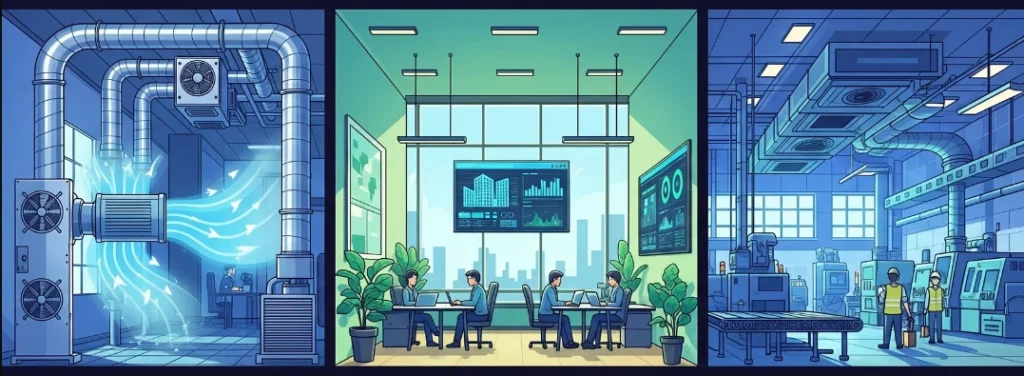
HVAC Systems: Trigger filtration, boost fresh air, or raise alerts when particle spikes are detected.
Commercial Buildings: Document compliance with air quality standards, reassure tenants, and optimize ventilation for comfort.
Industrial Sites: Monitor worker exposure, flag unhealthy zones, automate dust extraction systems.
Healthcare & Schools: Protect the most vulnerable with precise, real-time measurement and instant responses.
From the boardroom to the boiler room, measuring PM2.5 over BACnet MS/TP ensures integration with virtually any building automation system, no IT headaches required.
PM2.5 vs. VOCs vs. CO2: Different Sensors, Different Stories
It’s easy to lump “air quality” into one fuzzy category, but these sensors play very different roles—think doctors of different specialties:
PM2.5 Sensors: Detect solid and liquid particles smaller than 2.5 microns. Sources include combustion (cars, cooking), dust, and smoke. Impact: respiratory, cardiovascular health.
VOC Sensors: Measure gases like formaldehyde, benzene—products of paints, furniture, or cleaning agents. Impact: headache, nausea, chronic toxicity.
CO2 Sensors: Track levels of carbon dioxide, mainly reflecting human exhalation. Used as a proxy for ventilation adequacy and occupancy.
PM2.5 vs. PM1.0 vs. PM10: Sizing Up the Particle Parade
PM1.0: Measures even smaller particles (less than 1 micron), such as nanoparticles from combustion or certain industrial processes.
PM2.5: Captures fine particulates—these penetrate deep into the lungs.
PM10: Larger particles like pollen, mold, and dust. These are generally trapped by the nose and throat.
Analogy: If your building’s air was a rock concert, PM10 is the crowd outside the gates, PM2.5 are fans packed in front of the stage, and PM1.0 are the sneaky groupies backstage.
Comparison Table: PM2.5, VOC, CO2, PM1.0, PM10
| Sensor | What It Measures | Main Source Examples | Health Impacts | Typical Use Case |
|---|---|---|---|---|
| PM1.0 | Particles <1 micron | Smoke, combustion, pollution | Deep lung, possibly bloodstream | Industrial exposure, research |
| PM2.5 | Particles <2.5 microns | Vehicle exhaust, smoke | Lungs + heart, air quality index | Smart buildings, HVAC |
| PM10 | Particles <10 microns | Dust, pollen, mold | Upper respiratory system | Basic IAQ monitoring |
| VOC | Volatile organic compounds (gas) | Furniture, paint, cleaning | Headache, nausea, chronic disease | Green buildings, BMS |
| CO2 | Carbon dioxide (gas) | Human respiration | Drowsiness, proxy for ventilation | Occupancy, HVAC |
The Smart Revolution: Affordable, Precise, Everywhere
A decade ago, a PM2.5 sensor with BACnet connectivity felt as rare as a unicorn in a server room. Today, thanks to leaps in sensor tech and the enduring simplicity of RS485/BACnet MS/TP, these sensors are:

Affordable for mass deployment, not just high-end projects.
Precise enough for meaningful management and compliance.
Plug-and-play compatible with building automation, without IT acrobatics or sky-high install bills.
In summary: The PM2.5 BACnet MS/TP sensor is the watchdog you never knew you needed—watching over your air, talking to your building, and doing it all with efficiency that makes mass adoption not just possible, but practical.
If you think “out of sight, out of mind” applies to indoor air, it’s time to see the unseen. With the PM 2.5 BACnet MS/TP Sensor, you can measure what matters—and take action where it counts, with the tools and protocols your building already trusts.