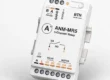
4-20 mA sensors and Modbus Sensors fulfill distinct functions in industrial settings.
The 4-20 mA sensors operate using an analog current loop to convey signals, making them particularly well-suited for monitoring variables such as temperature and pressure. They are known for their reliability and resistance to electrical interference, although they do have limitations in terms of data resolution.
On the other hand, Modbus sensors employ a digital communication protocol that facilitates real-time data transmission over networks. This capability allows for the integration of multiple devices, enhancing system scalability, though it may necessitate a more intricate setup process.
The selection between these two types of sensors hinges on the specific needs of the application, weighing factors such as ease of use versus adaptability in monitoring systems.
Key Takeaways
- 4-20 mA sensors operate using analog signals, making data interpretation straightforward, while Modbus sensors communicate using digital protocols.
- Modbus allows for multiple devices to be connected on a single network, enhancing scalability, whereas 4-20 mA typically transmits a single analog signal.
- In environments with electrical noise, 4-20 mA sensors are generally more reliable, whereas Modbus provides the advantage of real-time data transmission, which is beneficial for process control.
- The implementation of 4-20 mA sensors is often simpler and more cost-effective than that of Modbus sensors.
- The decision between using 4-20 mA and Modbus sensors should be based on the specific needs of the application, with 4-20 mA being ideal for simpler setups and Modbus being suitable for applications requiring advanced communication capabilities.
Overview of 4-20 Ma Sensors
4-20 mA sensors are highly regarded for their reliability in industrial applications, utilizing a standard current loop signal transmission method that ensures accurate data transfer over extended distances. The 4-20 mA range signifies a measurement from 4 mA (the lowest limit) to 20 mA (the highest), providing a linear relationship conducive to precise monitoring of physical parameters such as temperature, pressure, and flow.
These sensors are commonly used in process control industries, enabling seamless integration of instruments within control systems. Their resistance to electrical noise and effective performance in harsh environments make them suitable for manufacturing plants, oil and petroleum facilities, and water treatment plants. Furthermore, the straightforward nature of the 4-20 mA signal simplifies troubleshooting and maintenance, enhancing their overall appeal. As a result, 4-20 mA sensors play a vital role in industrial automation, ensuring reliable performance and data integrity across a wide range of applications.
Here, we have summarized the scaling of temperature and humidity according to the voltage 4-20ma.
Overview of Modbus Sensors
Modbus sensors play a crucial role in industrial automation systems by utilizing the Modbus communication protocol for efficient data exchange. This widely recognized standard allows devices to communicate over both serial lines and Ethernet networks, making Modbus sensors adaptable to a variety of applications, including temperature and pressure monitoring, flow measurement, and level detection.
These sensors provide real-time data transmission, essential for effective process control and monitoring. The Modbus protocol operates on a master-slave architecture, where a master device queries multiple slave sensors, facilitating streamlined data management. Each sensor is assigned a unique identifier, enabling scalable network configurations tailored to different operational needs.
Additionally, Modbus sensors offer numerous benefits, such as ease of use, reliability, and compatibility with a wide range of devices. Their versatility makes them ideal for new installations as well as upgrades to existing systems. The integration of Modbus sensors significantly improves operational efficiency and data precision, thereby enhancing the overall performance of industrial automation systems. A comprehensive understanding of the Modbus protocol is essential for professionals seeking to optimize sensor applications in their fields.
Key Differences in Communication
In industrial settings, the communication methods used by 4-20 mA sensors and Modbus sensors exhibit significant differences that impact their functionality and deployment. 4-20 mA sensors operate on an analog signal that varies in direct proportion to the measured variable, allowing for straightforward data interpretation through a continuous current loop. This approach simplifies integration into existing systems and maintains data integrity over short distances.
Conversely, Modbus sensors utilize a digital communication protocol that enables data exchange over greater distances. This protocol can accommodate multiple devices within a single network, providing greater design flexibility. Modbus operates on a master-slave architecture, where a master device initiates communication, facilitating more advanced data management and diagnostics.
While both methods aim to ensure reliable data transmission, the selection between them typically hinges on the specific needs of the application, such as distance, complexity, and the number of devices involved. 4-20 mA sensors are advantageous for their simplicity and resilience, whereas Modbus sensors are preferable for their scalability and enhanced monitoring features. Recognizing these fundamental differences is crucial for choosing the appropriate sensor technology in industrial applications.
Advantages and Disadvantages
Evaluating the advantages and disadvantages of 4-20 mA sensors and Modbus sensors is crucial for making informed decisions in industrial applications. 4-20 mA sensors are known for their simplicity and reliability, making them suitable for straightforward monitoring tasks where minimal installation complexity is preferred. Their analog signal transmission is robust against electrical noise, ensuring consistent accuracy in various environments.
However, 4-20 mA sensors have limitations in terms of data granularity and the inability to transmit multiple signals over a single wire. This can lead to increased wiring and maintenance costs in more complex systems. Conversely, Modbus sensors excel in communication capabilities, allowing multiple devices to connect within a single network, thus simplifying installation in large setups. They also provide higher accuracy levels and enable real-time data monitoring, making them ideal for advanced industrial applications.
Despite these benefits, Modbus sensors can be more intricate to configure, often requiring specialized knowledge for installation and troubleshooting. Understanding these advantages and disadvantages is essential for selecting the appropriate sensor type based on specific operational needs and system requirements in the field of electronics and electrical engineering.
Choosing the Right Sensor
To select the most suitable sensor for a specific application, individuals should evaluate several critical factors, including the intended use of the sensor, its compatibility with existing systems, and the unique requirements of the measurement task. It is crucial to have a clear understanding of the operational environment and the type of data output needed.
The following table highlights important considerations when choosing between different types of sensors:
| Criteria | 4-20 mA Sensors | Modbus Sensors |
|---|---|---|
| Communication Form | Analog | Digital |
| Signal Range | 4-20 mA | Variable, often continuous |
| Implementation Cost | Generally lower | Higher due to increased complexity |
| Sensor Compatibility | Well-suited for analog input systems | Requires devices that support Modbus |
Frequently Asked Questions
Can 4-20 Ma Sensors Work With Wireless Systems?
The integration of 4-20 mA sensors with wireless systems is not only feasible but can also be highly effective. These sensors are designed to transmit their signals wirelessly, allowing for dependable communication while preserving the accuracy of the data and the overall efficiency of the system. By utilizing appropriate wireless technology, 4-20 mA sensors can seamlessly operate within a wireless framework, offering enhanced flexibility and performance in various applications.
What Are Common Applications for Modbus Sensors?
Modbus sensors are widely utilized in industrial automation systems for applications such as process control and energy monitoring. They facilitate real-time data acquisition and enable effective communication between devices, thereby improving operational efficiency and reliability across diverse manufacturing and utility sectors.
How Do Environmental Factors Affect Sensor Performance?
Environmental conditions play a crucial role in sensor performance, significantly impacting measurement accuracy. Factors such as temperature and humidity necessitate periodic calibration of sensors to ensure reliability and optimal functionality across diverse operating environments. Proper management of these environmental influences is essential for maintaining sensor precision and trustworthiness in various applications.
Are 4-20 Ma Sensors More Cost-Effective Than Modbus Sensors?
A comprehensive cost analysis indicates that 4-20 mA sensors generally have lower upfront costs and installation expenses when compared to Modbus sensors, which can enhance their cost-effectiveness across various applications. Conducting a precise pricing comparison is crucial to determine the most economical choice for specific use cases.
Can I Convert Signals Between 4-20 Ma and Modbus?
Yes, it is possible to convert signals between 4-20 mA and Modbus using appropriate signal converters. These converters facilitate effective communication by ensuring that the sensors are compatible, which allows for the integration of various sensor technologies in different industrial applications. This capability is essential for monitoring and control systems that require reliable data exchange between analog and digital formats.