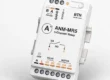
0-10 V sensors and Modbus Sensors serve different purposes and operate on distinct principles.
0-10 V sensors are analog devices that generate a voltage output proportional to the physical parameter they measure, such as temperature or light intensity. This analog nature makes them straightforward and suitable for applications requiring basic control, like lighting systems.
Conversely, Modbus sensors employ a digital communication protocol that allows for the interconnection of multiple devices, enabling centralized data collection and management. They excel in more intricate environments, such as industrial automation, where the integration of various data types and system reliability are crucial.
Recognizing these differences is essential for choosing the right sensor based on specific application requirements.
Key Takeaways
- 0-10 V sensors operate using analog signals, while Modbus sensors employ digital communication for transmitting data.
- The analog signals from 0-10 V sensors may experience degradation over long distances, whereas Modbus signals retain their integrity regardless of distance.
- Modbus sensors facilitate centralized data management for multiple devices, offering a more complex network structure compared to the straightforward configuration of 0-10 V sensors.
- While 0-10 V sensors are suited for simpler applications, Modbus sensors are designed to thrive in intricate industrial environments requiring robust data handling.
- The wiring for 0-10 V sensors is relatively straightforward, but Modbus sensors necessitate more complex connections to support enhanced functionalities.
Overview of 0-10 V Sensors
In the field of sensor technology, 0-10 V sensors play a crucial role in a variety of applications, particularly within Buiilding Automation
and industrial control systems. These sensors generate an output voltage that spans from 0 to 10 volts, offering a standardized approach for signal transmission that is widely compatible with numerous devices, facilitating seamless integration into existing systems.
The main purpose of 0-10 V sensors is to transmit information regarding physical parameters such as temperature, humidity, and light levels by adjusting the output voltage in response to changes in the environment. This analog signal is commonly employed in control systems, where it can impact the functioning of actuators, relays, and other system components.
One of the key benefits of 0-10 V sensors is their straightforward design and dependability. They require minimal wiring and are less susceptible to signal degradation over short distances compared to other types of sensors. Moreover, their ability to interface directly with analog control systems significantly enhances their applicability in various industrial settings, making them a favored option for engineers and system integrators.
Here, we have summarized the scaling of temperature and humidity according to the voltage 0-10V .
Overview of Modbus Sensors
Modbus sensors are a specialized type of sensor technology that leverage a digital communication protocol for data transmission. This innovative approach facilitates enhanced connectivity, enabling multiple devices to communicate over a singular network. The widespread adoption of the Modbus protocol in industrial environments underscores its importance for applications in automation and monitoring systems.
Key features of Modbus sensors include:
- Versatility: The Modbus protocol accommodates diverse data types and interfaces seamlessly with various devices, such as Programmable Logic Controllers (PLCs), Remote Terminal Units (RTUs), and Human-Machine Interfaces (HMIs).
- Scalability: Modbus allows for straightforward integration of additional sensors and devices, making it easy to expand systems without requiring extensive redesign efforts.
- Cost-Effectiveness: Utilizing a standardized protocol minimizes wiring complexity and associated costs, leading to optimized installation expenses.
- Reliability: The protocol incorporates robust error-checking mechanisms to ensure accurate data transmission, significantly enhancing the reliability of sensor communications.
Key Differences in Functionality
How do 0-10 V sensors and Modbus sensors differ in functionality? The main difference lies in their signal transmission and data management methods. 0-10 V sensors operate on analog signals, where the output voltage is proportional to the measured value. This straightforward approach makes them easy to implement in various systems; however, their accuracy may be compromised over long distances due to signal degradation and susceptibility to noise.
In contrast, Modbus sensors use a digital communication protocol to transmit data in discrete packets. This allows for improved accuracy and reliability, as digital signals are less prone to interference. Modbus can maintain data integrity over long distances, making it well-suited for complex systems that require real-time monitoring and control.
Additionally, Modbus sensors can connect multiple devices on a single network, facilitating centralized data management. This is a significant advantage over 0-10 V sensors, which typically necessitate individual connections for each device. In summary, while both types of sensors are vital for monitoring applications, their distinct functionalities greatly affect their applicability in different environments.
Applications for Each Sensor Type
Understanding the applications of 0-10 V sensors and Modbus sensors highlights their distinct advantages in various settings. 0-10 V sensors are typically utilized in straightforward systems, including lighting control and HVAC Applications, where direct analog outputs are sufficient for effective monitoring and adjustment. These sensors enable seamless operation in environments that prioritize simple integration without the complexities of intricate networking.
In contrast, Modbus sensors excel in more intricate environments, particularly in industrial automation. Their capability to communicate over long distances and connect multiple devices makes them well-suited for centralized monitoring and control systems.
Key applications for each sensor type include:
- Illumination Control: 0-10 V sensors are frequently employed to adjust brightness levels in commercial buildings.
- HVAC Systems: Both sensor types are utilized for monitoring temperature and airflow, with 0-10 V sensors being more prevalent in less complex configurations.
- Industrial Automation: Modbus sensors are particularly advantageous in scenarios requiring the aggregation of data from various sources.
- Remote Monitoring: Modbus sensors facilitate remote data access, significantly improving operational efficiency in industrial applications.
This overview underscores the specific contexts in which each sensor type is most effective, ensuring clarity in their respective roles within electronic systems.
Choosing the Right Sensor
Selecting the appropriate sensor for a specific application is crucial for optimizing system performance and reliability. When evaluating sensor options, it’s essential to consider the distinct characteristics of both 0-10 V sensors and Modbus sensors, as these factors can significantly impact the selection process.
A comprehensive assessment of the application’s requirements is necessary. For example, if the system requires a straightforward analog signal with less complex wiring, a 0-10 V sensor may be the ideal choice. Conversely, if the application necessitates advanced capabilities such as communication among multiple sensors or extended distance coverage, a Modbus sensor would be more suitable.
To assist in the decision-making process, the following comparative table highlights key features of each sensor type:
| Feature | 0-10 V Sensors |
|---|---|
| Compatibility | Limited to analog systems |
| Installation Complexity | Generally simpler |
| Communication Range | Short-range |
| Application | Basic monitoring |
| Feature | Modbus Sensors |
| Compatibility | Broad range of systems |
| Installation Complexity | More complex wiring |
| Communication Range | Extended-range |
| Application | Advanced monitoring |
Frequently Asked Questions
Can 0-10 V Sensors Be Used With Wireless Systems?
Yes, 0-10 V sensors can be integrated into wireless systems. It is crucial to verify that the sensors are compatible with the chosen wireless platform to facilitate effective data transmission and precise monitoring. This compatibility is vital for optimizing system performance and ensuring reliable operation.
What Is the Lifespan of Modbus Sensors?
In a manufacturing environment, implementing effective maintenance strategies can significantly improve the lifespan of Modbus sensors, generally ranging from 5 to 10 years. Conducting regular inspections and making timely replacements are critical for maintaining optimal performance and ensuring reliability in operations.
How Do I Troubleshoot 0-10 V Sensor Issues?
To effectively troubleshoot issues with 0-10 V sensors, begin by checking the wiring connections to ensure they are secure and correctly installed. Following that, verify the sensor’s calibration by comparing its output readings against the expected values. Make any necessary adjustments to ensure that the sensor operates with the desired accuracy.
Are Modbus Sensors More Expensive Than 0-10 V Sensors?
When comparing costs, Modbus sensors generally have a higher price point than 0-10 V sensors. This is primarily due to the advanced features of Modbus sensors, which include digital communication capabilities and enhanced integration options within complex systems. These features enable more efficient data management and connectivity, making Modbus sensors a preferred choice for sophisticated applications, despite their increased cost.
Can Both Sensor Types Be Used in the Same Application?
Yes, both sensor types can be employed within the same application, as long as their compatibility is ensured. This adaptability increases the versatility of the application, enabling customized solutions that align with specific operational needs and system designs.