In commercial buildings, temperature usually gets all the attention. It is the loudest character in the HVAC story, the one everyone notices first. But humidity data in room controller design is often the quieter variable that explains why a room feels comfortable, sticky, dry, heavy, or oddly tiring even when the temperature looks perfectly fine on paper.
That is why humidity data in room controller functionality deserves more respect in modern building automation. When humidity is measured, interpreted, and used properly, it improves occupant comfort, supports HVAC optimization, helps prevent building-related risks, and creates better control logic for room-level and air-handling strategies in commercial buildings.
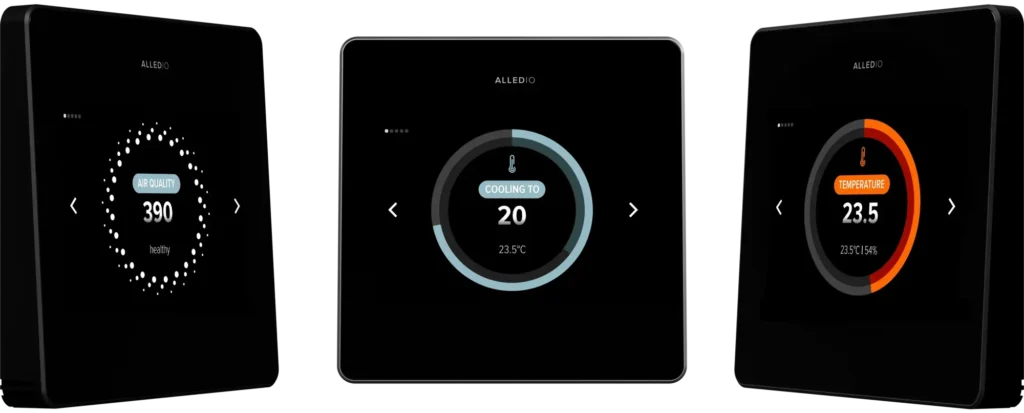
The Alledio Room Controller is a good example of this shift. It combines temperature and humidity sensing with room control logic and communication capabilities, making it easier to turn moisture data into practical action rather than leaving it as a forgotten number on a trend graph.
Why Humidity Is Not Just “Extra Weather Indoors”
Humidity influences how people feel temperature, not just how air is measured. When indoor air is too humid, spaces can feel warmer and heavier than the thermostat suggests; when it is too dry, they can feel cooler, harsher, and less comfortable, especially over long occupancy periods.
That makes humidity data in room controller design valuable from multiple angles. It helps building operators understand perceived comfort, gives room control logic a more complete picture of indoor conditions, and supports better decisions when indoor climate complaints do not match temperature readings alone.
This is also why indoor comfort standards matter. The idea of a comfort zone is not just about temperature setpoints; it is about balancing the indoor environment so people actually feel well in the space.
Better Comfort, Smarter Energy Use
One of the most useful things about humidity data in room controller applications is that it supports more intelligent HVAC decisions. If a controller knows both the temperature and the moisture content of the air, it can help avoid crude control strategies that overheat, overcool, or over-ventilate spaces just to chase a comfort complaint that is actually moisture-related.
This matters in commercial buildings because comfort and energy efficiency usually wrestle like two polite rivals at a conference dinner. With better humidity awareness, control strategies can become more precise: ventilation can be adjusted more intelligently, humidification or dehumidification can be triggered only when needed, and AHU sequences can work with better context rather than broad assumptions.
Humidity data also connects directly to enthalpy and dew point thinking in HVAC. That is especially relevant in AHUs, where moisture content influences air-treatment energy and where humidity sensors can support smarter humidification and dehumidification control.
The Alledio Room Controller as a Humidity Data Source
The Alledio Room Controller is designed as an OEM room controller with integrated temperature and humidity sensors, plus optional CO2 and VOC detection, making it a strong fit for commercial building applications where room-level environmental data matters.
This means humidity data in room controller operation is not treated as an afterthought or a bolt-on accessory. The data is gathered directly at the point where occupants actually experience the environment, which is often more useful than relying only on distant system-level measurements.
The controller also communicates over RS485 Modbus, which makes it practical as either a standalone controller or as part of a broader SCADA or BMS integration strategy. In other words, the humidity value can stay local for room logic or travel upward into larger analytics and supervisory control layers.
Humidification and Dehumidification in Commercial Buildings
Some commercial buildings need more than passive monitoring. They need active humidification or dehumidification control, and this is where humidity data in room controller design becomes genuinely operational.
The Alledio platform also has versions and control concepts where room-level humidity values can inform actual humidification and dehumidification strategies. That matters in commercial environments such as:

Hotels, where guest comfort can be affected by dry or muggy room air
Office buildings, where stable humidity improves day-long comfort and supports productivity
Retail spaces, where indoor climate influences dwell time and perceived quality
Museums, archives, and specialty commercial interiors, where excessive moisture swings can affect materials as well as people
Dehumidification is especially useful in commercial buildings with high latent loads, large occupancy shifts, or summertime cooling challenges. If moisture is not managed properly, the result is not just discomfort; it can become a building-performance problem.
Humidity Data for AHUs and HVAC Strategy
At room level, humidity helps explain comfort. At AHU level, it helps explain energy and air-treatment logic. This is why humidity data in room controller setups can be valuable even when the real heavy lifting happens elsewhere in the HVAC system.
Room-level humidity data can provide feedback to upstream AHUs, which may then refine humidification, dehumidification, or free-cooling decisions. In broader HVAC control, moisture content is tied to enthalpy, dew point, and the latent heat portion of air treatment, all of which affect how efficiently air is conditioned.
In other words, humidity is not just a room comfort metric; it is also a control variable with system-wide implications. A room controller that sees humidity clearly can become a better witness for what the AHU should do next.
Humidity Control to Reduce Risk of Condensation
One of the most practical reasons to care about humidity data in room controller design is condensation risk. When air moisture is not monitored properly, cooling systems can accidentally push surfaces or local conditions toward dew point, leading to moisture problems on pipes, cooling ceilings, glazed surfaces, or other cold elements.
This is not merely an engineering inconvenience. In commercial buildings, condensation can contribute to material damage, surface degradation, comfort complaints, and avoidable maintenance costs. Dew point-aware humidity monitoring allows HVAC systems to respond before moisture becomes visible enough to start an argument.
In that sense, humidity control is a bit like having a smoke detector for moisture problems—ideally useful long before anyone notices the stain.

Humidity Control to Reduce Risk of ESD
Another important commercial use case is Humidity control to reduce risk of ESD (electrostatic discharge). In dry conditions, static electricity builds up more easily, which can create risk in environments with sensitive electronics, technical equipment, or controlled operational processes.
The article on Humidity control to reduce risk of ESD explains why maintaining stable humidity is one of the most effective ways to reduce ESD risk, especially when combined with grounding, materials selection, and proper operational practices. This makes humidity data in room controller logic particularly relevant in commercial spaces such as data-handling areas, electronics manufacturing zones, labs, and technical rooms where the consequences of static are more expensive than dramatic.
OEM and Private Label Opportunities
For companies that want humidity-aware room controls under their own brand, the OEM angle matters too. Andivi’s OEM services for private label manufacturing are positioned around helping companies develop, customize, and manufacture products under their own name, combining engineering, firmware, design, and production support.
That is relevant because humidity data in room controller features are often more valuable when they are embedded into a product family that matches a client’s own market, visual identity, and integration logic. In building automation, the difference between a component and a product is often the layer of adaptation sitting on top of the hardware.
Why This Matters More Than It Sounds
Humidity rarely gets the glamour treatment in building automation. It is not flashy. It does not dominate spec sheets the way communication protocols or display design often do. Yet humidity data in room controller functionality is one of those quietly powerful features that improves both comfort and control quality across commercial buildings.
It helps people feel better in a space, gives HVAC systems better context, supports humidification and dehumidification logic, reduces the risk of condensation and ESD-related issues, and creates more intelligent room-level control in the places where indoor climate is actually experienced.
Find Out More
If room controls are going to make better decisions, they need better inputs—and humidity belongs firmly on that list. The Alledio Room Controller brings humidity data in room controller applications into practical commercial use by combining room-level sensing, control logic, and integration capabilities in one platform.
Find out more about Andivi Room Controllers and get in touch.