In today’s precision-driven industries, selecting the right temperature probe is a critical decision that impacts operational efficiency, safety, and cost management. From manufacturing floors to research laboratories, these instruments ensure accurate temperature monitoring tailored to specific applications. However, with diverse probe types and technical variables at play, the choice can be complex. This guide distills the essentials—probe types, key selection factors, application needs, system compatibility, and cost considerations—into a clear framework. By understanding these elements, businesses can optimize performance, mitigate risks, and enhance return on investment, making informed decisions that align with strategic objectives.
Andivi’s Temperature Probes are more than measurement tools; they are enablers of quality and reliability across sectors. Whether ensuring compliance in food safety, maintaining process integrity in production, or supporting innovation in scientific settings, the right probe drives success. This article provides a structured approach to navigate the selection process, empowering professionals to match technical specifications with operational demands efficiently and effectively.
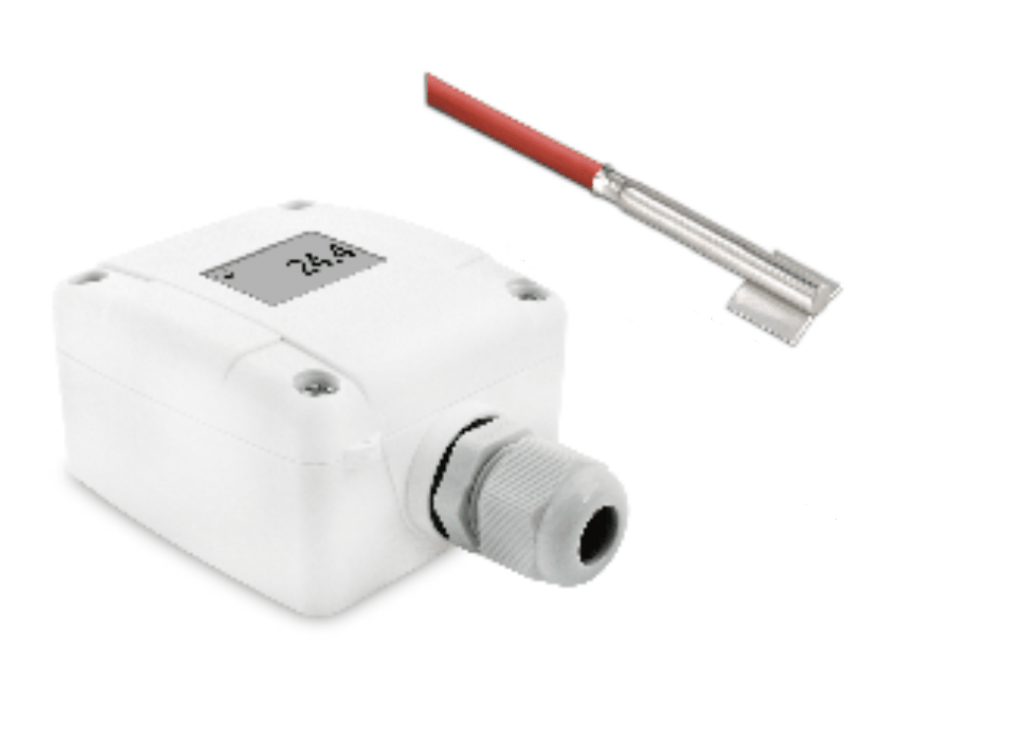
Temperature Probes vary by design and function, with thermocouples, resistance temperature detectors (RTDs), thermistors, and infrared probes being the most prevalent. Thermocouples excel in high-temperature environments, RTDs deliver superior accuracy for precise applications, thermistors provide rapid response in narrow ranges, and infrared options enable non-contact measurement. Andivi enhances this lineup with specialized HVAC-focused designs: angular probes for tight spaces, surface magnetic probes for pipe monitoring, and contact probes for direct surface readings—all optimized for Modbus and BACnet integration. Selecting the appropriate type requires aligning the probe’s capabilities with operational demands.
Each probe type serves distinct industries—thermocouples suit heavy manufacturing, RTDs support laboratory precision, and infrared probes enhance HVAC diagnostics. Within building automation, Andivi’s portfolio offers: the Modbus Mean Value Duct Temperature Sensor ensures uniform readings across large ventilation systems, while the Surface Temperature Sensor ANDKBTF tracks boiler performance with precision. Understanding these differences ensures the chosen probe meets technical specifications and integrates seamlessly into workflows, minimizing inefficiencies or errors in temperature monitoring.


Key Factors in Probe Selection
Effective probe selection hinges on critical parameters: temperature range, accuracy, response time, durability, and physical dimensions. The required temperature span dictates the probe’s operational limits, while accuracy and response time determine its suitability for precision or dynamic processes. Durability ensures reliability under environmental stress, and size ensures compatibility with spatial constraints. In HVAC contexts, Andivi’s probes meet typical ranges of -20°C to 80°C with accuracy down to ±0.2°C, ideal for energy-efficient climate control, while fast-responding thermistors excel in variable air volume (VAV) systems.
Businesses must evaluate these factors against specific use cases. For example, a production facility may prioritize ruggedness and speed, whereas a research institution demands exactness over resilience. Andivi’s offerings, like the Modbus Screw-In Immersion Sensor (ANDENTF/MD) for liquid-filled lines or the Contact Temperature Sensor (ANDANTF2/MU) for room-level precision, cater to these nuances, ensuring clients avoid the pitfalls of mismatched equipment. This strategic assessment prevents costly mismatches, optimizing performance and resource allocation.




Application-Specific Requirements
Probe selection must reflect the intended application, as needs differ across sectors. Industrial settings may require probes enduring extreme heat or corrosion, while food processing demands hygienic, regulatory-compliant materials. Scientific applications often necessitate high-precision instruments, and non-invasive monitoring favors infrared technology. For building automation, Andivi addresses diverse HVAC scenarios—commercial offices needing cost-effective probes like the ANDANTF3VA/MU, industrial plants requiring durable thermocouples, or retrofits leveraging surface magnetic probes (ANDOBTF) for legacy pipes.
Tailoring the probe to its purpose enhances operational outcomes. A manufacturing line benefits from durable, high-range probes, whereas quality control in pharmaceuticals relies on pinpoint accuracy. In a smart building, Andivi’s mean-value duct sensors (ANDMWTF/MD) optimize large-scale ventilation, cutting energy costs by up to 15%, while contact probes ensure compliance in regulated spaces like labs. Matching the probe to the task ensures compliance, safety, and efficiency, directly impacting productivity and standards.
Compatibility with Existing Systems
Seamless integration with current equipment is non-negotiable. Probes must align with connectors, data loggers, or control systems—whether wired for stability or wireless for flexibility. Compatibility extends to output signals and software, ensuring real-time data utilization without retrofitting or additional costs. Andivi’s focus on Modbus and BACnet protocols ensures our probes, like the stainless steel ANDANTF3VA/MU, plug effortlessly into modern BMS, bridging the gap between legacy systems and cutting-edge smart buildings.
Overlooking this risks operational disruptions. A probe incompatible with a legacy system can halt processes, necessitating unplanned investments. For example, a non-BACnet probe in a smart HVAC setup might require costly adapters, delaying deployment—Andivi’s protocol-ready designs eliminate this headache. Verifying technical specifications upfront guarantees a cohesive setup, preserving workflow continuity and maximizing equipment investments.
Cost and Long-Term Value
Probe costs span a wide spectrum, from economical thermistors to premium RTDs, influenced by performance and durability. Initial price must be weighed against longevity and reliability—inexpensive options may falter quickly, driving up replacement expenses, while robust probes offer sustained value in demanding conditions.
Budget decisions should prioritize return on investment. For high-stakes environments, a higher upfront cost mitigates downtime and maintenance risks, whereas simpler applications may justify modest selections. This balanced approach aligns financial planning with operational goals, ensuring cost-effectiveness over time.
Environmental Considerations for Probe Performance
HVAC probes face diverse conditions—humidity in air handlers, dust in industrial ducts, or temperature swings in unconditioned spaces. Andivi designs probes with protective materials (e.g., stainless steel in ANDANTF3VA/MU) and IP ratings to withstand these stresses, ensuring consistent accuracy and lifespan. This resilience is critical in humid climates, where unprotected probes can lose 10% accuracy within months, or dusty warehouses where particulates clog standard sensors.
Ignoring environmental risks failure. A standard probe in a damp duct may corrode, skewing data and triggering inefficiencies. Andivi’s surface magnetic probes (ANDOBTF) excel on exposed pipes in cold storage, while immersion sensors endure wet conditions—choices that prevent energy spikes or equipment strain. Andivi’s environmental focus helps clients select probes that endure, safeguarding system performance.
Customization Options from Andivi
Beyond standard offerings, Andivi provides tailored solutions—custom probe lengths, mounting styles, or protocol configurations—to meet unique HVAC needs. A facility with non-standard ductwork might require an angular probe, or a legacy BMS might need a specific Modbus setup, both achievable with Andivi’s expertise.
Customization enhances fit and function. Off-the-shelf probes may fall short in complex projects, but Andivi’s bespoke options ensure precision and integration, reducing adaptation costs and boosting client satisfaction—a differentiator in competitive B2B markets.
Maintenance and Calibration Best Practices
Probe accuracy depends on upkeep. Andivi recommends regular cleaning (e.g., wiping contact sensors), spot-checks for drift, and periodic calibration to maintain performance between formal intervals. For Modbus/BACnet probes, software diagnostics can preempt issues, a feature built into Andivi’s designs.
Neglecting maintenance undermines reliability—drift in a duct sensor could spike energy use. Andivi’s probes, like the ANDMWTF/MD, are engineered for easy maintenance, and our guidance ensures clients maximize longevity and precision, protecting their investment.
Future Trends in Temperature Probe Technology
The future of temperature probes in building automation is evolving rapidly, driven by IoT integration, AI analytics, and sustainability demands. Smart probes with wireless connectivity and self-diagnostic capabilities are emerging, allowing predictive maintenance and real-time optimization—trends Andivi is poised to lead with Modbus and BACnet advancements. As net-zero building standards tighten, probes will play a larger role in energy monitoring, a shift already influencing Andivi’s R&D.
These innovations impact selection today. Clients investing in Andivi’s forward-compatible probes, like the ANDENTF/MD, gain flexibility for tomorrow’s smart systems, avoiding obsolescence. By anticipating these trends—think IoT-enabled HVAC or AI-driven climate control—Andivi ensures clients stay ahead, blending current reliability with future-ready technology.
Conclusion
Selecting the ideal temperature probe is a strategic choice that enhances precision, efficiency, and profitability in building automation. By assessing probe types, selection factors, application needs, compatibility, costs, environmental resilience, customization, and maintenance—supported by Andivi’s Modbus and BACnet-ready solutions—businesses can secure optimal tools for their HVAC systems. This holistic approach minimizes risks, ensures compliance, and drives long-term value.
Andivi empowers clients to match technical specifications with operational priorities, from standard sensors to custom designs. With our expertise, the right probe isn’t just a tool—it’s a competitive advantage. Contact Andivi today to find the perfect solution for your building’s needs.
YOUR NEXT STEP …