In a premium hotel, the room is never just a room. It is a first impression, a service desk, a lighting scene setter, a climate manager, and, on a good day, a quiet little magician that makes everything feel effortless. That is exactly why the Guest room control Panel matters so much. When done well, it disappears into the experience. When done badly, it feels like asking guests to pilot a small spaceship before they can dim the lights.
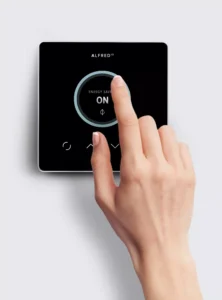
The Alledio Room Unit is designed for the first scenario. At a glance, it may look like a familiar room controller. In reality, it is an OEM touch display room unit built around a fully customizable interface, flexible firmware, and the kind of integration options that make it suitable for much more than standard HVAC control.
For hotel brands aiming at a premium guest experience, that distinction matters. A Guest room control Panel should not feel like a recycled thermostat with ambitions. It should feel like a natural extension of the room itself: elegant, intuitive, and tailored to the way the property wants to host its guests.
More Than a Thermostat in a Nice Suit
The easiest mistake is to see the Alledio Room Unit only as a room controller or a room thermostat. That is one use case, yes, but it is not the whole story. Strip away the current interface, and what remains is a compact OEM touch panel platform that can be shaped into different identities depending on the hotel concept, operational workflow, and guest journey.
This is what makes it especially relevant as a Guest room control Panel. The hardware provides the foundation, but the real value lies in how the interface and firmware can be adapted. In practical terms, the same device can be configured to manage lighting scenes, temperature, blinds, room status, housekeeping requests, do-not-disturb modes, wellness settings, and selected hotel services.
That flexibility is a serious advantage in hospitality. Hotels are not buying a screen; they are designing an experience. And the control panel sitting by the bed or beside the entrance often becomes the most touched piece of technology in the room. It needs to be smart, but it also needs manners.

Why High-End Hotels Need a Better Guest Room Control Panel
Luxury hospitality lives in the details. Guests may not remember the exact lumens of the bedside light, but they will remember whether controlling the room felt smooth or clumsy. A Guest room control Panel shapes that impression in subtle but powerful ways.
In a high-end hotel, guests expect three things from in-room technology:
Immediate clarity, because no one wants to read instructions to turn off a reading lamp.
Elegant control, because premium spaces should feel curated, not cobbled together.
Relevant convenience, because useful features are welcome, while digital clutter is not.
This is where a customizable panel becomes far more valuable than a generic one. Rather than forcing the hotel to adapt to a fixed interface, the panel can be designed around the property’s service philosophy. A business hotel may prioritize fast scene switching, blackout shades, and “make up room” functions. A wellness resort may emphasize calm visual design, spa-style room moods, and simple environmental comfort controls. A design hotel may want minimalism so clean it looks as though the wall learned to think.
A good Guest room control Panel does not only control the room. It communicates the hotel’s standards.
What a Guest Room Control Panel Can Actually Do
Once you stop thinking of the Alledio Room Unit as “just” a controller, the list of hotel use cases becomes much broader. The device can act as a Guest room control Panel that combines comfort, convenience, and service into one polished touchpoint.
Typical functions may include:
Lighting control, including master off, bedside lights, bathroom lights, and mood scenes.
Shade and blind control, with simple up/down/stop commands or predefined comfort presets.
Climate adjustment, such as temperature setpoint control and fan mode selection.
Room scenes, for example Sleep, Relax, Work, Welcome, or Evening.
Housekeeping communication, such as make up room or do not disturb.
Service shortcuts, including concierge requests, spa reminders, or room service access.
Status display, such as weather, time, occupancy-related states, or room mode indicators.
The beauty of this approach is not the number of possible functions. It is the fact that the hotel can decide which functions deserve front-row placement and which should stay quietly in the background. In premium hospitality, restraint is often more luxurious than excess.

Designing the Interface: Small Screen, Big Responsibility
A Guest room control Panel for a hotel room is not a tablet and should not pretend to be one. The screen is compact, which is a strength rather than a limitation. Good design on this format is about precision, hierarchy, and comfort.
The Alledio Room Unit offers actually an OEM touch display that is well suited for a carefully planned UI. That means the interface can be built around a few principles that matter in guest-facing hospitality technology.
Keep the first screen obvious
The home screen should answer the guest’s most common needs at a glance. In most hotel rooms, that means lights, temperature, and one or two high-frequency room functions. If a guest has to hunt through menus for basic control, the interface is already losing.
Use widgets with purpose
A premium Guest room control Panel can include:
Large touch buttons for lights, scenes, and room modes.
Sliders for dimming or temperature adjustment.
Toggle switches for simple binary states.
Status icons for do not disturb, make up room, occupancy, or connectivity.
Room scene cards with clear names and visual cues.
Service buttons for housekeeping, concierge, or room service shortcuts.
Micro-animations or transitions that add polish without slowing the experience.
Avoid “feature stuffing”
One of the great sins of hotel technology is trying to impress everyone and confusing the guest instead. A strong and customizable user interface is edited like a fine menu: enough choice to feel thoughtful, not so much that it becomes work. The panel should support the guest, not audition for an award in complexity.
Branding Matters More Than Most Control Manufacturers Admit
For a premium hotel, visual coherence is not decoration. It is strategy. Guests notice when the room technology feels disconnected from the rest of the property. A generic controller with a generic UI can make even a beautifully designed room feel slightly rented.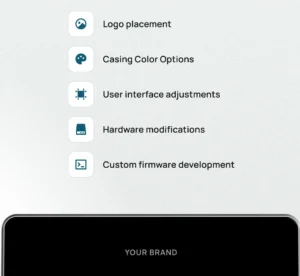
That is why a customizable Guest room control Panel has real value. The interface can be aligned with the hotel’s visual identity through:
Brand colors and accent tones.
Typography choices that match the design language.
Custom icons and naming conventions.
Splash screens or subtle brand moments.
UI styling that fits the property, whether understated, modern, classic, or boutique.
This does not mean the panel should become a billboard. Quite the opposite. In premium hospitality, branding works best when it is woven in with a light hand. The goal is not to shout the brand. The goal is to make the technology feel as though it belongs in the room as naturally as the furniture does.
Firmware Is Where Hospitality Logic Comes to Life
The interface is what the guest sees. Firmware is what makes the room behave intelligently behind the scenes. This is one of the strongest parts of the Alledio concept.
Because the Room Unit is an OEM platform, the firmware can be adapted to suit the hotel’s needs. That changes the conversation from “What does this controller do out of the box?” to “What should this Guest room control Panel do for this property?”
That opens the door to hotel-specific logic such as:
Scene behavior tailored to room categories or suites.
Integration with occupancy or presence-based control strategies.
Different control layers for guests, housekeeping, and maintenance.
Communication with BMS, room management systems, or middleware.
Remote firmware updates for feature improvements or refinements.
Hybrid control roles where the device acts as both guest interface and local room intelligence point.
In other words, the panel can be taught the house rules.
One Platform, Many Hotel Concepts
A luxury business hotel, a resort, and a serviced apartment brand do not need identical interfaces. They need a common hardware platform that can support different user experiences. This is where the Alledio Room Unit becomes particularly interesting from an OEM and hotel-group perspective.
A single Guest room control Panel platform can be adapted across multiple property types:
Business hotels may prefer quick, efficient controls with work-focused scenes.
Resorts may want softer UI flows, wellness scenes, and service access.
Boutique hotels may prioritize design-led minimalism and storytelling.
Branded residences may require a more residential interaction model with deeper environmental control.
This creates consistency where it matters, without forcing sameness where it does not. For operators, that is useful. For guests, it feels intentional.
Andivi’s OEM Development Advantage
A panel like this only becomes truly valuable when the company behind it can do more than supply hardware. Andivi’s strength is that it can support firmware development, UI customization, and broader hardware and software adaptation around the Alledio platform.
That matters for hotel projects because requirements rarely stay politely simple. One client may want a highly refined branded interface. Another may need specific protocol handling, sensor integration, or workflow logic. Another may want the device to sit inside a wider OEM product family. Those requests move beyond “product selection” and into development work.
This is where an OEM approach makes sense. Instead of treating the device as fixed, the platform can be shaped around the project. For a hotel brand investing in guest experience, that is a far more useful starting point than a generic panel with a long manual and short imagination.
Why This Matters Commercially
A high-end hotel does not choose a Guest room control Panel only because it can switch lights and adjust temperature. It chooses one because it influences guest satisfaction, perceived quality, operational consistency, and brand presentation.
A well-designed panel can help Reduce guest confusion, Support premium room positioning, Streamline housekeeping and service interactions, Create a more polished in-room technology experience, Future-proof room control through firmware evolution and platform flexibility.
Technology in hospitality should feel like a well-trained concierge: present when needed, invisible when not. That is the bar a premium Guest room control Panel should meet.
Find Out More
The Alledio Room Unit is not simply a controller with a screen. It is a Guest room control Panel platform that can be shaped into a hotel-specific experience through interface design, firmware customization, and OEM development.
For high-end hotel projects, that makes it a far more interesting proposition than standard room control hardware. It gives you the opportunity to create a control experience that feels tailored to the property, aligned with the brand, and genuinely pleasant for the guest to use.