A unified wall unit for solar thermal ecosystems
For manufacturers building complete domestic heating portfolios, a configurable Room unit that natively understands solar thermal and heat pump dynamics is a practical way to standardize the user experience while keeping engineering options open. The Alledio Room unit is a production-ready OEM platform that combines adaptable firmware with a clear, brandable interface, so it can present solar collector temperatures, tank stratification, and auxiliary heat states alongside traditional room comfort controls. It serves as the visible, dependable touchpoint in the home, while integrating with your existing controller architecture and data models. Designed as a flexible wall unit, it supports custom UI flows, iconography, terminology, and feature tiers, enabling a single hardware base to serve multiple product lines and model years.

Features mapped to solar thermal + heat pump control
The Room unit provides precise temperature setpoint control, manual/auto fan speed selection for fan-coils or air handlers, and intuitive mode switching across heating, cooling, and auto operation. For solar thermal, it can present collector and tank temperatures, visualize charge status, and reflect protection states like stagnation or frost mitigation. Schedules and operating regimes (weekday/weekend, holiday, eco) help align heat pump cycles with solar availability, while indoor air quality monitoring supports demand-driven ventilation strategies to preserve comfort without unnecessary energy use. Connectivity is designed for real-world integration: Modbus/RS485 for robust controller links, optional Wi‑Fi/Bluetooth for commissioning and diagnostics, 0–10 V analog outputs and digital I/O for legacy or hybrid systems. In short, the feature set is built to orchestrate the handoff between solar gains and compressor operation, prioritizing stored solar heat when available and shifting to heat pump assistance only as needed.

Design clarity that reduces friction (and costs)
Room units succeed or fail at the user interface. A quiet, obvious UI lowers the learning curve, reduces installer callbacks, and minimizes everyday user errors. The Alledio Wall unit emphasizes clarity: clean layouts, large touch targets, and plain language that makes it easy to understand what is happening—Is solar charging active? What is the tank temperature? Which mode is running and why? This simplicity pays dividends. When users can make correct choices quickly, systems run closer to design intent, efficiency increases, and service overhead falls. Good design is not a luxury; it is a multiplier on product performance and brand trust.
A strategic upsell for solar-leaning portfolios
For manufacturers expanding into solar thermal, a branded Room unit is a natural upsell that sharpens product differentiation at the wall without reengineering core controls. It creates a premium, consistent experience across models, simplifies dealer training and commissioning, and reinforces brand identity in the home. The same platform can support tiered features—basic comfort control at entry level, advanced solar visualizations and schedules on higher trims—allowing marketing and product teams to segment offerings cleanly while sharing the same underlying hardware and documentation.
Built to coexist with any mobile app
Mobile apps are indispensable, but a reliable, intuitive wall control remains the anchor for daily use. The Alledio Room unit is designed to coexist with any mobile application strategy—local control for day‑to‑day operation and quick check-ins, with the app available for remote access, analytics, and advanced configuration. This dual-path approach ensures the user is never blocked by connectivity issues while retaining the benefits of cloud features and over‑the‑air updates. The result is a system that feels modern yet failsafe, with graceful degradation and a clear division of roles between wall unit and app.
Energy value of solar thermal collectors
Solar thermal collectors are one of the most direct routes from sunlight to usable heat, avoiding conversion losses associated with electricity generation and storage. In domestic systems, collectors preheat domestic hot water and can support space heating shoulder seasons, which materially reduces compressor runtime and electrical demand. By prioritizing stored solar heat and using the heat pump as an assist, the overall seasonal performance improves: lower peak loads, reduced cycling, and better utilization of naturally available energy. For manufacturers, this translates into improved real‑world efficiency metrics, more compelling payback narratives, and alignment with policy incentives—without complicating the homeowner’s experience when the Room unit makes the energy flows easy to interpret.
Integration services for any controller
Every controller ecosystem is different, so integration should be predictable rather than painful. The Alledio OEM Room unit connects cleanly across architectures: robust Modbus for deterministic links, optional IP transport for diagnostics, 0–10 V and digital I/O for mixed signal systems, and configurable registers that align with your state machine and safety logic. Firmware can mirror your control philosophy—solar priority algorithms, anti‑short‑cycle strategies, defrost awareness, hysteresis windows for tank charge, and fallback modes for stagnation or frost protection—so the wall unit remains truthful, fast, and consistent with your brand’s behavior.
Firmware and UI, tuned for HVAC – a single platform, with room for growth
Andivi’s core competence spans IoT and HVAC firmware—stable connectivity, clear state machines, and maintainable code—plus the less glamorous but mission‑critical details: commissioning flows, automated test harnesses, structured logging, and OTA strategies. That same discipline applies across adjacent devices that need thoughtful firmware and durable UI. For solar thermal + heat pump systems, the focus is practical: present the right information, automate decisions that should be automatic, and make manual overrides obvious and reversible. The result is a system that earns trust with transparency and resilience.
Portfolios evolve—new modes, revised control curves, different collector types, expanded app features. The Alledio platform supports iterative releases without wholesale rewrites, so you can add features as regulations, incentives, and market expectations shift. With an adaptable UI layer and configurable firmware modules, product teams can introduce meaningful updates on a predictable cadence, keeping the wall unit aligned with the broader roadmap.
PV monitor or Solar Thermal?
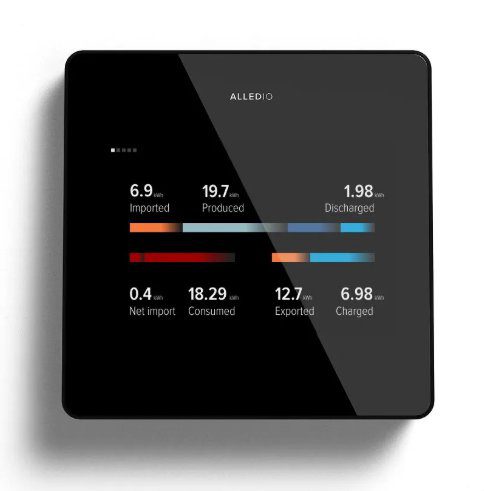
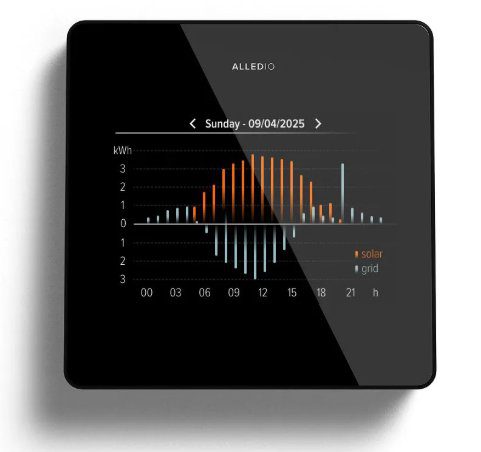
In addition to the existing Solar Thermal Room unit, Andivi’s OEM Solar PV Monitor is a branded-ready energy intelligence module that gives manufacturers and resellers a turnkey way to visualize and optimize solar performance without reengineering core systems. It measures produced, imported, exported, consumed, charged, and discharged energy in real time, computes net import, and presents battery state of charge so users can prioritize self-consumption, trim grid reliance, and validate savings at a glance.
Built for seamless OEM integration, it supports customizable UI, firmware tailoring, and coexistence with existing cloud platforms and mobile apps—delivering a consistent branded experience from dashboard to device.
An invitation to collaborate & why ISO certificates matter
If a solar thermal–forward Room unit that integrates cleanly with heat pump controllers matches your direction, Andivi is ready to compare notes—requirements, constraints, and milestones—to shape a solution that feels unmistakably yours. The goal is simple: a branded wall unit that clarifies complex energy flows, coexists with your mobile app, and helps your systems deliver the efficiency they were built for, from pilot to production.
Building domestic systems at scale requires repeatable processes and responsible operations. ISO 9001 underpins requirements traceability, change control, corrective actions, and continuous improvement—reducing field risk and keeping development and production timelines reliable. ISO 14001 supports environmental stewardship in materials, processes, and documentation, aligning with regulations and customer expectations. Together, these certifications reflect a disciplined engineering culture and lower the long‑term cost of ownership for both the manufacturer and the homeowner.