A premium hotel room should not feel like a puzzle box with mood lighting. It should feel effortless, intuitive, and quietly intelligent. That is exactly where a Hotel Room Controller (HRC) earns its place. When designed well, it becomes the invisible conductor of the room—coordinating comfort, ambiance, and convenience without ever asking the guest to think too hard.
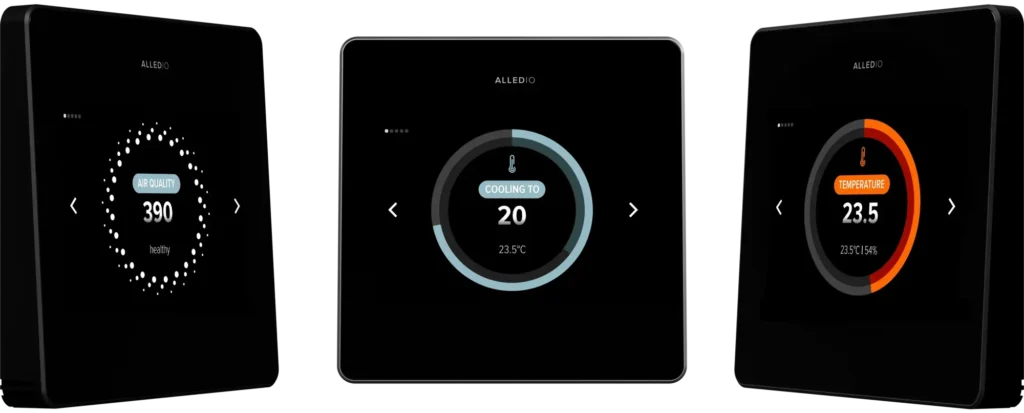
The Alledio Room Controller fits this role especially well. What looks like a sleek room controller is, in reality, an OEM touch display platform that can be shaped into a branded, highly tailored Hotel Room Controller (HRC) for luxury hospitality. It is not just a thermostat with a prettier face. It is a configurable user interface, firmware platform, and integration point wrapped into one refined device.
For hotel operators and OEM partners, that distinction matters. A Hotel Room Controller (HRC) should not merely control functions. It should support the hotel’s service philosophy, visual identity, and operational model.
More Than a Wall Thermostat
The easiest way to underestimate the Alledio Room Controller is to see only the current use case. Yes, it can function as a room controller. But once you look past the default interface, the real story begins.
At its core, the Alledio Room Controller is a compact OEM touch panel with a touch display, communication options, sensor integration, and the flexibility to become different products for different projects. In hospitality terms, that means the same hardware can be transformed into a Hotel Room Controller (HRC) that handles far more than temperature. Lighting scenes, blinds, room status, service requests, and branded room experiences can all live behind the same piece of glass.
That is what makes it valuable for high-end hotels. Luxury is rarely about adding more buttons. It is about making the right functions feel effortless.
Why a Hotel Room Controller (HRC) Matters in Premium Hospitality
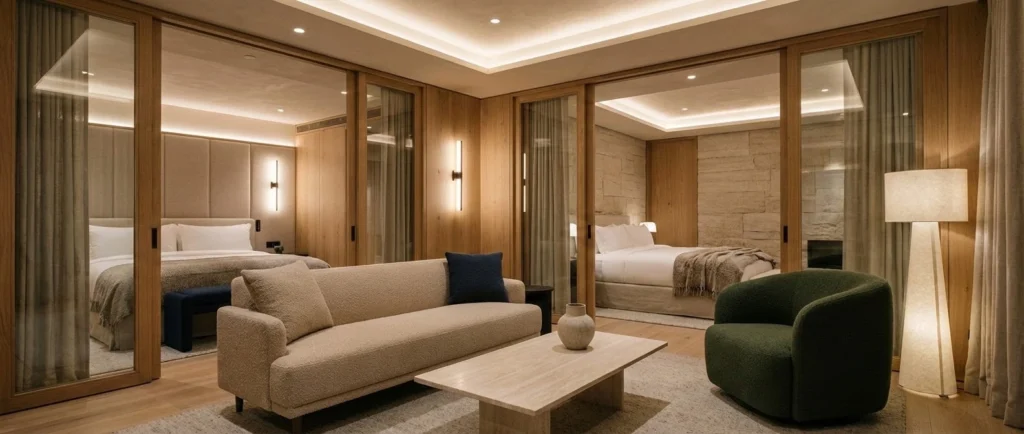
Guests may never compliment a controller directly, but they will absolutely notice when a room feels easy to use—or oddly stubborn. In premium hospitality, small moments define the bigger impression. A smooth arrival scene, intuitive bedside controls, and clear room functions all contribute to whether the room feels polished or patched together.
A strong Hotel Room Controller (HRC) helps a hotel deliver on three expectations:
Clarity, because no guest wants to decode a control panel after a long flight.
Elegance, because premium interiors deserve technology that belongs there.
Convenience, because useful in-room control should save effort, not create it.
The Alledio Room Controller gives hotel brands room to define those priorities for themselves. Instead of adapting the guest experience to a rigid controller, the controller can be adapted to the guest experience.
For more on how a guest room control panel shapes the in-room experience, this broader hospitality angle is worth exploring.
What a Hotel Room Controller (HRC) Can Control
A hotel room is a small ecosystem. A capable Hotel Room Controller (HRC) should act as the central touchpoint for that environment rather than being limited to one or two building functions.
Typical functions can include:
Lighting control, including reading lights, ambient scenes, and master off.
Blind and shade control, with presets for privacy, daylight, or sleep.
Climate settings, including temperature adjustment and fan-related control.
Room scenes, such as Welcome, Relax, Work, Evening, or Sleep.
Housekeeping communication, like make up room or do not disturb.
Service shortcuts, including concierge, spa, or room service requests.
Status feedback, such as weather, room mode, or occupancy-linked behavior.
The trick is not to show every possible function at once. The trick is to design the Hotel Room Controller (HRC) so that the most relevant controls feel obvious, and everything else remains elegantly in the background.
The Interface: Small Screen, Big Job
A hotel touch panel does not need to behave like a tablet. In fact, trying to make it one is often where things go sideways. The Alledio Room Controller works best when treated as a focused, high-value interface rather than a miniature app store on the wall.
A well-designed Hotel Room Controller (HRC) should prioritize:
Immediate access to the most-used controls.
Large, touch-friendly elements for quick interaction.
Shallow navigation, so guests do not get lost in menu tunnels.
Clear visual hierarchy, where the important actions stand out first.
Consistent interaction patterns, so the panel feels natural after one or two taps.
Useful UI elements can include buttons, sliders, toggles, room scene cards, status icons, and clean service request actions. On a compact screen, discipline matters more than decoration.
If you want a deeper look at what makes a customizable room unit interface practical, that topic deserves its own spotlight.
Branding the Experience, Not Just the Device
In luxury hospitality, visual consistency is not a cosmetic extra. It is part of how trust and quality are communicated. A generic control interface inside a carefully designed suite can feel like wearing hiking boots with a tuxedo.
That is why customization matters so much. A Hotel Room Controller (HRC) should be able to reflect the hotel brand through:
Brand colors and tone.
Typography choices aligned with the property style.
Custom icons and wording.
Tailored splash screens or subtle branded moments.
A UI style that feels modern, boutique, calm, bold, or understated—depending on the hotel.
The point is not to turn the controller into an advertisement. The point is to make it feel native to the room.
For background on the OEM touch panel custom firmware approach behind this flexibility, that angle is especially relevant here.
Firmware: Where the Hotel Logic Lives
The interface is what guests see. Firmware is what determines how the room behaves. This is where the Alledio platform becomes particularly compelling as a Hotel Room Controller (HRC).
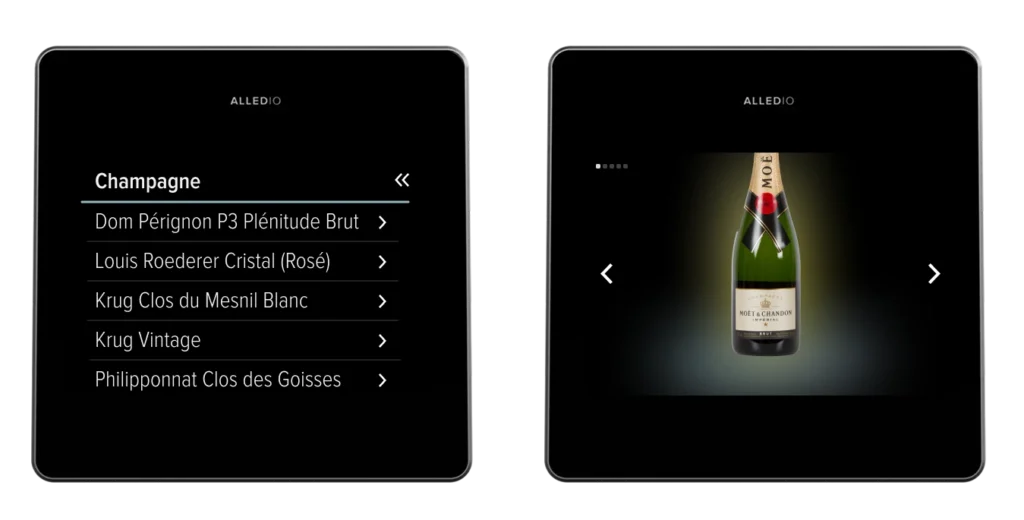
Because it is an OEM platform, firmware can be adapted around the hotel’s specific requirements. That means the device can support custom room scenes, different guest and staff workflows, protocol-specific integrations, and logic tied to occupancy, service modes, or building automation rules.
This flexibility changes the question from “What does this controller do?” to “What should this controller do in this hotel?” That is a much better question.
For a product-focused view of the OEM room unit Modbus Alledio, the hardware foundation becomes much clearer.
OEM Services: From Nice Idea to Real Product
Many hotel concepts begin with a great idea and a very optimistic sketch. Turning that into a stable, production-ready controller is the harder part. This is where Andivi’s OEM approach matters.
The value is not just in supplying a configurable device. It is in supporting the broader path from concept to finished solution through firmware development, interface design, hardware adaptation, and production-oriented engineering. For hotel groups, branded OEM projects, or manufacturers serving hospitality, that is often the difference between “interesting concept” and “actual rollout.”
To understand how OEM services support that journey, it helps to see the process as more than a product transaction.
Why This Sells in High-End Hotels
A premium property does not choose a Hotel Room Controller (HRC) because it can technically switch lights. It chooses one because the controller affects guest comfort, room perception, staff workflows, and brand consistency.
A well-designed Hotel Room Controller (HRC) can help a hotel:
Reduce guest confusion.
Deliver a more premium in-room technology experience.
Support service interactions more elegantly.
Align digital touchpoints with interior design and brand identity.
Build a future-ready control layer that can evolve over time.
Good hospitality technology behaves like a discreet concierge: available, competent, and never theatrical.
Find Out More
The Alledio Room Controller is not simply another wall controller. It is a flexible Hotel Room Controller (HRC) platform that can be shaped around a hotel’s identity, room logic, and guest experience goals.
For premium hospitality projects, that makes it far more interesting than a standard off-the-shelf room control device. It gives hotels the chance to design a control experience that feels custom, coherent, and worthy of the room around it.