A room unit built for AHUs in real buildings
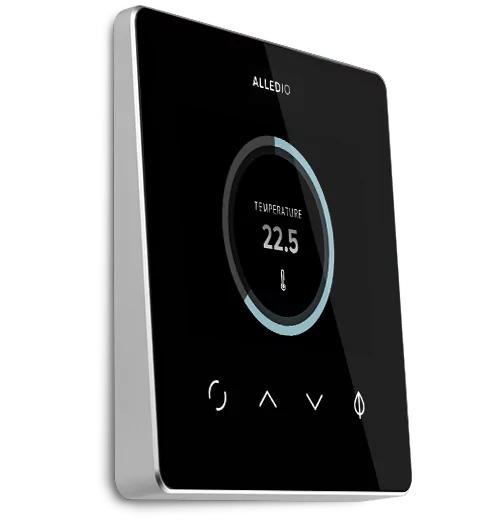
For air handling units across offices, schools, healthcare, hospitality, and multifamily housing, the Alledio OEM Room unit with integrated CO2 sensing turns the wall into a trustworthy command post for ventilation. Alledio’s Room unit platform, developed by Andivi, is designed for diverse building types and AHU architectures, pairing a clear, brandable interface with adaptable firmware that speaks the language of modern ventilation (Modbus, API).
Besides temperature and humidity, the newly added CO2 measurement elevates the device from a simple thermostat-style controller to a real indoor air quality steward, enabling dynamic control of outside air, targeted scheduling, and data-driven decisions that reduce wasted energy while improving comfort. Whether used as a primary control point or a local override panel, this Wall unit aligns occupants, facility managers, and equipment with shared, visible IAQ targets.
Demand-controlled ventilation that responds to ppm, not guesses
Demand-controlled ventilation works best when it measures what matters. By reading CO2 (ppm) and responding to thresholds in real time, the Room unit helps AHUs deliver enough fresh air when occupants are present and scale back when they are not. For AHUs, this means avoiding constant high fan speeds and excessive outside air intake that stress coils, increase reheat, and inflate energy bills. For people, it means fewer headaches, reduced drowsiness, and a more productive environment, especially where occupancy fluctuates. Accurate ppm feedback reduces guesswork, allowing optimized damper positions, smarter fan curves, and priority control that treats air quality as a first-class signal.
Schedule override: efficiency first when spaces are empty
With integrated CO2 sensing, the Room unit can override schedules when spaces are clearly unoccupied—keeping fans and dampers at minimal safe settings and avoiding unnecessary conditioning. If CO2 remains near background levels, the AHU avoids wasteful fresh air pulls that would need heating or cooling. This is effective during holiday periods and hybrid work, ensuring ventilation follows occupancy rather than clock time.
Schedule override: comfort first when occupancy surges
When a room is more crowded than scheduled—training seminars, pop-up events—the Room unit can boost fresh air above the planned setpoint to maintain IAQ, then return to normal as CO2 falls. For AHUs, that means temporary increases in outside air, fan speed, or damper position that track real load without shifting baselines. Users experience steadier cognitive performance and fewer complaints because the system reacts to now, not assumptions
Controller agnostic by design
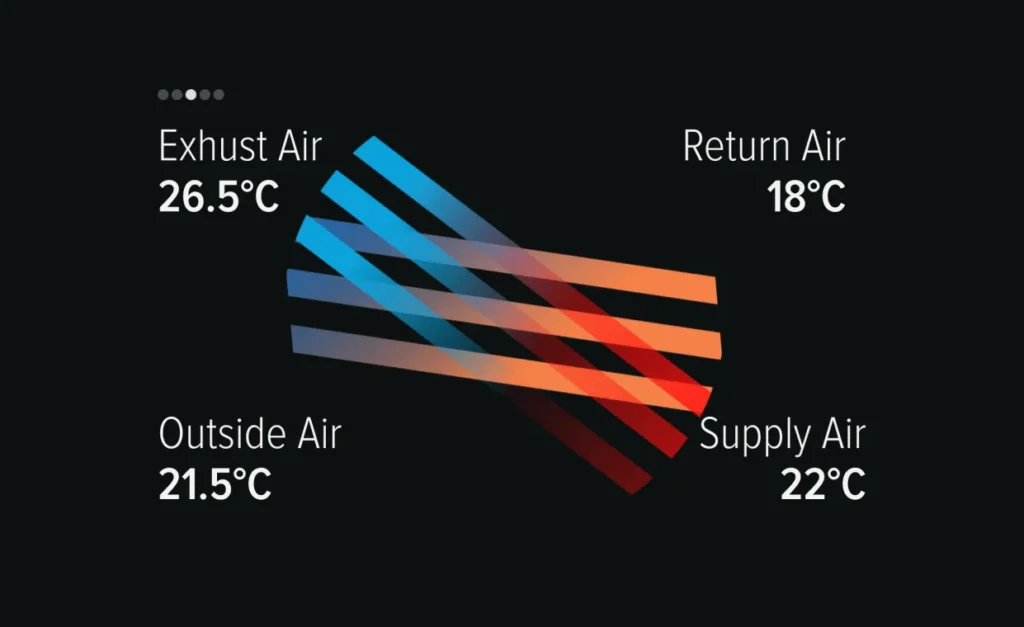
The Room unit is controller-agnostic. It connects to a wide range of HVAC controllers via Modbus on RS485 today, integrates via API where appropriate, and is being extended to support BACnet in 2026. That means manufacturers and integrators can keep their existing PLCs, ECUs, or BMS strategies and drop in the device as a native node rather than needing to re-architect control panels. Whether the system is relay-driven, analog-modulated via 0–10 V, or fully digital, the unit’s firmware can be tuned to your register maps, state machines, and safety logic. It also coexists with any mobile app strategy—use the Wall unit for reliable local control and fast daily adjustments, and let the app handle remote access, analytics, and fleet updates without creating single points of failure.
Design that drives adoption (and lowers support)
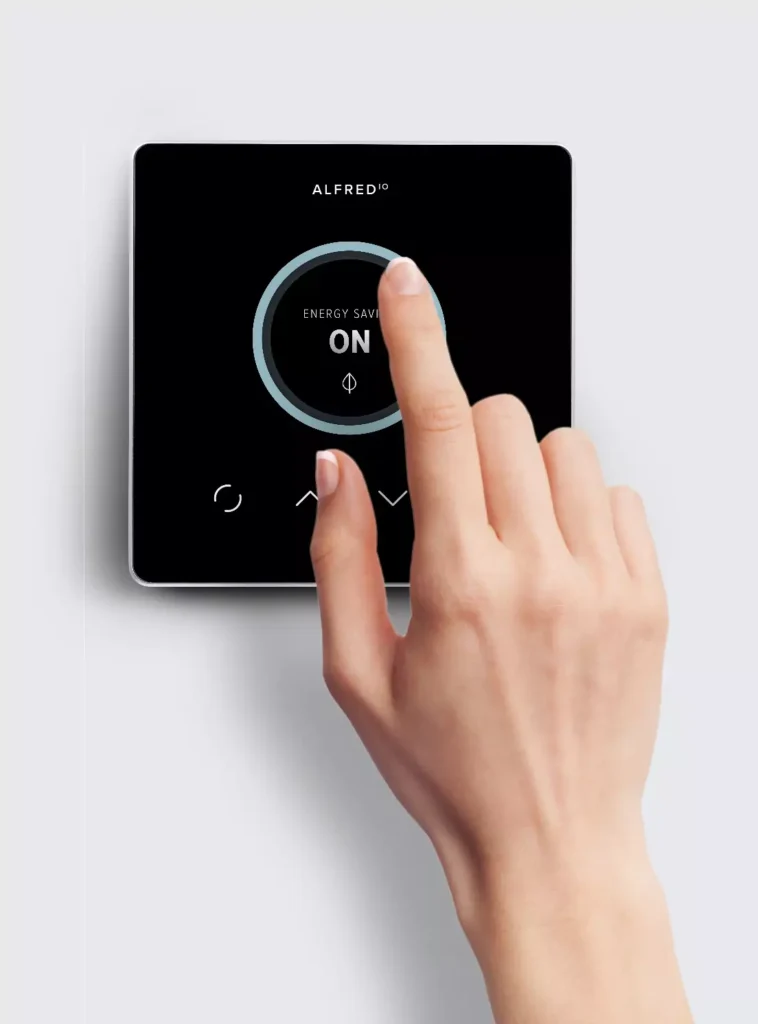
A room unit with CO2 measurement is only as good as its user experience. Andivi prioritizes a calm, simple interface with large touch targets, unambiguous states, and progressive disclosure of advanced settings so users of any age can operate it confidently. In commercial settings, this clarity shortens installer training, reduces helpdesk tickets, and minimizes expensive truck rolls caused by misconfiguration. In residential spaces, it helps families understand what fresh air, comfort modes, and schedules actually do—turning complex systems into approachable tools. Good design is not an accessory; it is a business driver that improves utilization, protects margins, and keeps building performance on track.
A practical upsell for HVAC manufacturers
For HVAC manufacturers, an OEM Room unit that measures CO2 is a compelling and credible upsell. It differentiates at the wall—where customers see and feel the system—without reinventing core controls. It standardizes commissioning across model lines, supports tiered feature sets (from basic scheduling to advanced IAQ automation), and strengthens brand equity through a consistent, premium touchpoint. Product teams gain a flexible platform that can evolve over time, with firmware and UI updates that add capabilities without reworking hardware. This is how portfolios scale: one solid Room unit, multiple configurations, many satisfied use cases.
Built on an adaptable OEM platform
Under the hood, the platform is designed for integration. Modbus for deterministic field links, optional API for cloud and app flows, 0–10 V and digital I/O for hybrid systems, and a configurable firmware layer that aligns with your architecture. CO2, temperature, and humidity sensing combine to give the AHU a richer picture of real conditions, enabling strategies from minimum ventilation maintenance to peak-demand fresh air boosts. The Wall unit operates reliably even if the network blips, while the app remains available for remote oversight and insight—two interfaces, one coherent experience.
Why this matters now
Ventilation expectations have shifted. Owners demand provable indoor air quality without runaway energy costs. Tenants expect cleaner, healthier air that supports well-being and productivity. Regulations and certifications increasingly spotlight measurable outcomes. A Room unit with integrated CO2 measurement meets this moment: it anchors demand-controlled ventilation, allows intelligent schedule overrides, and provides a transparent, user-friendly interface that turns IAQ into an everyday habit rather than a hidden variable.
An open invitation to collaborate
For manufacturers and integration teams exploring OEM control that is practical, brandable, and controller agnostic, Andivi is ready to compare notes and tailor the Room unit to your roadmap. The goal is straightforward: make ventilation smarter with CO2-driven logic, keep the user interface simple enough for everyone, and ensure the Wall unit coexists seamlessly with any mobile app. If that aligns with where your products are headed, let’s outline requirements and shape a solution that moves cleanly from prototype to production.