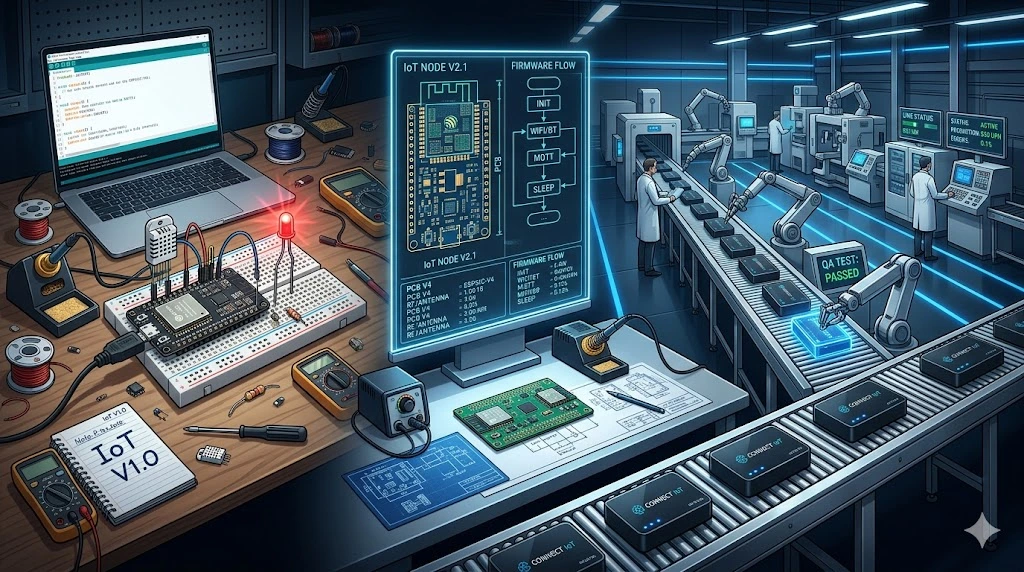
If developing for ESP32 looks easy from a distance, that is because the distance is doing a lot of heavy lifting. On the workbench, it can feel wonderfully straightforward: a dev board, a few sensors, some Wi-Fi magic, and suddenly your idea is alive. But turning that cheerful prototype into a reliable product is a different sport entirely—less weekend tinkering, more orchestra conducting.
That is exactly where companies tend to discover the difference between “we built something” and “we built something that can survive the real world.” For businesses moving from proof-of-concept to a real IoT product, Andivi can play a valuable role as a hardware and software development partner, helping shape electronics, firmware, enclosure logic, and production readiness into one coherent process.
Why ESP32 remains such a powerful choice
There is a reason developing for ESP32 keeps showing up in IoT conversations. The platform hits a rare sweet spot: strong connectivity options, solid processing power for many embedded tasks, a broad ecosystem, and enough flexibility to serve everything from smart sensors to control panels and connected devices.
In startup terms, ESP32 is a bit like a Swiss Army knife that also knows how to talk to the cloud. It gives teams room to prototype quickly, test ideas cheaply, and move fast without immediately drowning in custom silicon decisions. That speed matters, especially when the market does not wait politely for your firmware to become elegant.
Still, what makes ESP32 attractive early on can also lull teams into a false sense of security. A breadboard demo with Wi-Fi and a mobile app is not yet a product. Reliable power design, wireless performance, OTA update strategy, security, EMC behavior, and long-term maintainability have a nasty habit of arriving late to the meeting and demanding all the attention.

Developing for ESP32 is not just firmware
A common mistake in developing for ESP32 is treating the job as mostly a coding challenge. It is not. It is a systems challenge.
Yes, the firmware matters enormously. You need stable communication stacks, sensor integration, timing management, memory discipline, fault handling, and secure update capability. But the hardware architecture around the chip matters just as much. Antenna placement can make a brilliant design behave like it is shouting through a pillow. Power supply choices can introduce instability that looks like a software bug. Poor PCB layout can turn a neat concept into a field-support nightmare.
That is why the best ESP32 products are usually built by teams that understand the whole machine, not just one corner of it. Good embedded development is less like writing a document and more like tuning a band: the drums, guitar, and vocals all need to work together, or the audience only hears noise.
That broader systems view is exactly why many companies prefer working with an electronic hardware development company instead of stitching together freelancers and hoping the seams hold. When hardware, firmware, and product logic are developed together, ugly surprises tend to show up earlier—while they are still cheap enough to fix.
The road from prototype to product
The early phase of developing for ESP32 usually starts with experimentation. You prove the concept, validate the use case, connect a few sensors, and get data flowing. This is the exciting stage, when everything feels possible and deadlines still seem charmingly theoretical.
Then comes the harder part: translating the prototype into a production-minded architecture. This includes custom PCB design, selecting components that are actually available in real volumes, managing thermal and power constraints, designing for manufacturability, and making sure the firmware is structured for long-term maintenance rather than short-term heroics.
That transition is where many companies lose momentum. What looked simple in the prototype phase suddenly becomes a chain of dependencies: certification, sourcing risk, enclosure constraints, test procedures, factory programming, version control, user setup flows, and support expectations. The leap from a working concept to production-ready hardware is where many promising IoT ideas either mature gracefully or collapse under the weight of details they ignored too long.
For teams moving beyond a technical demo, Andivi’s article on STM32 and ESP32 firmware expertise is especially relevant, because it underlines a truth many startups learn the expensive way: firmware architecture is not a polish layer added at the end. It is part of the product’s long-term survival plan.
Where Andivi fits into the picture
Andivi is well-positioned for companies that need more than isolated engineering work. The real value is not merely in writing embedded code or laying out a PCB, but in connecting product design, hardware logic, firmware behavior, and business goals into one path that actually moves.
In practical terms, that means Andivi can support projects with electronics development, embedded software work, system integration, and product refinement toward manufacturing. For companies working on IoT devices, that combination matters. It helps avoid the classic relay-race problem where hardware blames firmware, firmware blames mechanics, and everyone blames the deadline.
There is also a broader strategic benefit. Many businesses do not need a supplier who simply executes instructions; they need a development partner who can challenge assumptions, identify weak points early, and keep the product anchored to what users actually need. That user-centric perspective is often the quiet difference between a technically impressive device and a commercially successful one.
For brands looking for a faster route to commercialization, private label manufacturing Europe can also be part of the conversation. In many cases, speed to market is not about doing less work, but about avoiding needless reinvention.
ESP32 and the business case for speed
For startups and innovation teams, developing for ESP32 often makes sense because it shortens the distance between idea and validation. It allows companies to test assumptions quickly, build pilot units faster, and gather feedback before investing in more expensive design decisions.
That speed, however, only becomes a business advantage when it is guided properly. Move too fast without structure, and you create technical debt wearing a name badge that says “prototype.” Move with the right architecture and product thinking, and you create a platform that can evolve into a robust commercial device.
This is where Andivi’s R&D mindset becomes relevant. The point is not just to get something running. The point is to help companies reach a product that is usable, manufacturable, supportable, and aligned with the market it aims to serve. In other words: not just fast, but fast in the right direction.
What companies should watch out for
When planning a product around ESP32, businesses should be careful about a few recurring traps.
One is overconfidence in the dev-board phase. Early success can be misleading if it ignores production realities. Another is underestimating firmware architecture. As features grow, fragile codebases become expensive very quickly. A third is treating connectivity as solved just because the chip supports Wi-Fi or Bluetooth. Real-world wireless behavior depends on the entire design, not just the logo on the module.
There is also the temptation to postpone decisions about security, remote updates, and diagnostics. That is a bit like building a house and planning to add the front door later. Technically possible, perhaps. Sensible, absolutely not.
From blinking board to real product
The beauty of developing for ESP32 is that it opens doors quickly. The challenge is that once those doors open, you still have to build the house behind them.
For companies building IoT products, Andivi can help bridge that gap—from early concept and prototype design to the tougher realities of integrated hardware, embedded software, and production planning. A solid example of this approach in practice is the OEM room controller Alledio, which shows how connected hardware can be both technically capable and genuinely user-friendly.
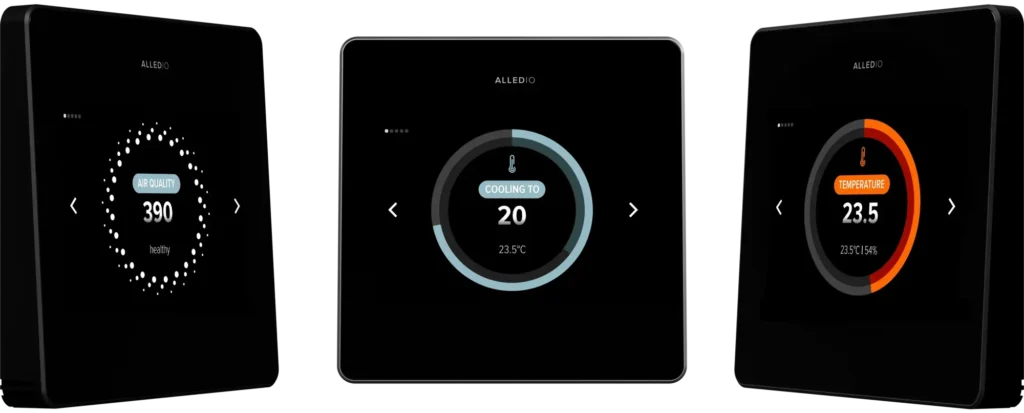
That is ultimately the difference that matters. Prototypes impress people for a moment. Products earn trust over time. And when a company needs help turning a bright embedded idea into something durable, scalable, and worth shipping, Andivi looks less like a vendor and more like the kind of development partner that quietly makes difficult things possible.